Rewards



Chain plying (sometimes called Navajo plying) turns one thin strand of yarn into a three-strand yarn without a spinning wheel or extra skeins. You make a loop, pull a new loop through it, and keep going, like crocheting a chain with your fingers, then let the loops twist into one plied strand.
It's useful when you love a lace or fingering weight yarn but want a heavier fabric, or when a thin yarn is too delicate for the thing you want to make. The result is roughly three times as thick and noticeably sturdier. The one thing that makes it work is keeping the loops an even size so the finished yarn is consistent.
Watch: Chain Plying Yarn Video Tutorial
Watch how Kate keeps each loop the same length and how the three strands twist together once she lets the plied section relax.
What You Need
A thin yarn: lace or fingering weight is the usual starting point. A smooth, light-colored yarn makes the loops easy to see, and a yarn with some twist plies more evenly than a loosely spun single.
No hook or needles for the plying itself; this is done with your hands. You'll want a way to wind the finished yarn and, to work it up, a hook or needle about two sizes larger than you'd use for the original yarn. No abbreviations are needed; if you use the plied yarn in a pattern, standard US terms apply.
Chain Plying Yarn Written Steps
From the original post: Do you ever find that your yarn is too thin and delicate? In this video Kate shows you a simple technique to thicken up your yarn and make your crochet projects more durable! Test it out with one of our lace weight yarns today
Step 1: Pull out a length of yarn and make a loose slip knot, leaving a loop about the length of your hand.
Step 2: Reach through that loop with your thumb and finger, grab the working yarn, and pull a new loop through, about the same length as the first.
Step 3: Let the first loop slide closed around the base of the new one. Those three strands (two sides of the old loop plus the working yarn) now run together.
Step 4: Repeat Steps 2 and 3, pulling a new loop through the last one each time, keeping the loops an even size.
Step 5: As you go, let the plied section twist on itself and wind it into a ball. Stop when you have as much as you need, then pull the last loop closed and tie it off.
Step-by-Step: How the Technique Works
- It's a crochet chain, pulled long. Each loop is a chain stitch made with your fingers, but you pull the loops long and let them collapse into three parallel strands.
- Three strands, one source. Every section of the plied yarn is the two legs of a loop plus the working strand feeding in. That's the "times three."
- Even loops mean even yarn. A long loop followed by a short one makes a thick spot next to a thin spot. Aim for a hand's length every time and the yarn stays consistent.
- Twist settles it. As you pull loops, the strands twist around each other. Letting the finished length hang and spin for a moment evens that twist before you wind it.
- The joins disappear. Each loop locks the last one, so there are no knots, and the small bumps where loops close soften once the yarn is worked up.
Tips and Common Mistakes
- You lose two-thirds of your yardage. 300 yards of lace weight becomes about 100 yards of plied yarn. Check that your project's yardage still works before you ply a whole skein.
- Keep the loops loose. Pulling each loop tight makes the yarn stiff and lumpy at the joins.
- Ply a little, then swatch. Make a few yards and try it with a hook before you commit the skein.
- Silk is slippery. Work over your lap so a dropped loop doesn't run.
When You'll Use This
Chain plying is for the skein you have, not the one you want to buy: a lace weight silk you'd rather crochet as a sturdy bag strap, a fingering weight that's too thin for a washcloth, or leftover thin yarn for a scrap yarn project. Plied lace weight behaves roughly like DK; plied fingering sits around worsted. Swatch rather than trusting the label math.
Related Stitches
- Crochet Starting Chain — the same motion you'll use to ply, done with a hook
- How to Hold Yarn Tension — even tension is what makes the plied yarn even
- Single Crochet Stitch — a dense stitch that shows off a sturdier plied yarn
- Browse every crochet stitch tutorial
Yarn for This Stitch
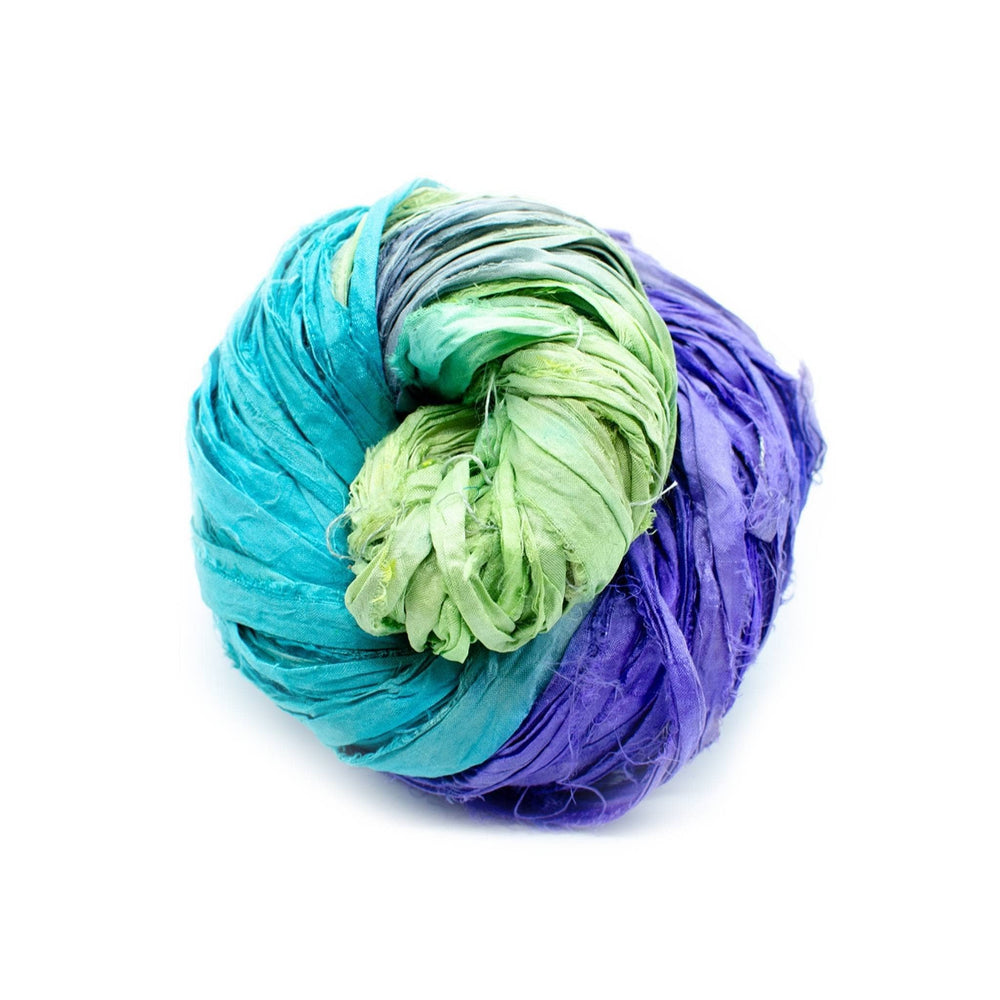
Chain plying starts with a thin yarn, so DGY's lace and fingering weight yarn is the natural place to begin. The recycled silk in that collection is hand-dyed by artisans in India and plies into a smooth, glossy three-strand yarn. If you'd rather skip the plying, the yarn weight chart helps you pick a heavier skein from the start.
If you'd like a new skein to practice on every month, Yarn of the Month sends three hand-dyed skeins with a knit and crochet pattern written for them, $29 a month plus shipping.
Chain Plying Yarn FAQ
How much thicker does chain plying make yarn?
About three times thicker, since the finished strand is three plies of the original. Lace weight comes out around DK; fingering comes out around worsted. Swatch to confirm, because twist and fiber change the result.
Does chain plying use more yarn?
It doesn't use more, but it gives you a third of the length. A 300-yard skein becomes roughly 100 yards of plied yarn.
Can I chain ply with a crochet hook instead of my fingers?
Yes. A large hook makes the loops easier to control for some people. Keep the loops long and loose.