Rewards



The starting chain, also called the foundation chain, is the first thing every flat crochet project needs. It's a row of linked loops that your first row of stitches is worked into, and the chain stitch that makes it is the same stitch you'll use for turning chains and spaces in almost every pattern.
It's the very first thing to learn in crochet. The one thing that makes it work is an even, relaxed grip on the yarn: a chain that's too tight is hard to crochet into, and a chain with mixed tension makes a wavy bottom edge. Both videos below cover it; the second is worked left-handed.
Watch: Crochet Starting Chain Video Tutorial
Watch how the hook dips under the yarn and turns toward you before it pulls through; that small twist is what keeps the yarn in the hook's throat.
What You Need
A smooth, light-colored worsted weight yarn shows each chain clearly while you're learning. Dark or fuzzy yarn hides the Vs you'll need to count.
A US H-8 (5 mm) hook is a comfortable size for worsted yarn. If your chains come out tight, go up one hook size for the chain only.
Abbreviations (US terms): ch = chain, sl st = slip stitch, st(s) = stitch(es), YO = yarn over. Supplies: yarn and a crochet hook.
Crochet Starting Chain Written Steps
Supplies Needed: Yarn, Crochet Hook
First make a slip knot by taking the tail of your yarn, looping the end of the tail over the working end push the working end through the loop you just created to form a new loop. Hold the new loop and pull both the tail and working end to tighten you slip knot.
Place your slip knot on your hook and pull the working end to gently tighten. Holding your hook in your dominant hand, and yarn tension in your non-dominant hand, follow these steps:
Step 1: Dip the end of your hook below the working end of yarn to grab the yarn in the hook
Step 2: Twist your hook towards you
Step 3: Pull the yarn through the loop on your hook
This is a completed chain stitch.
Repeat Steps 1-3 to make as many chains as needed for your pattern.
Step-by-Step: How the Technique Works
- The slip knot is the anchor. It's an adjustable loop that sits on the hook. Pull the tail to tighten it until it hugs the hook but still slides. It does not count as a chain.
- Yarn over. With the yarn running over your index finger, dip the hook under the working strand so the yarn lies in the hook's throat. Rotating the hook slightly toward you locks it in.
- Pull through. Draw that strand through the loop already on the hook. The old loop slides off and becomes a finished chain; the new loop stays on the hook.
- Repeat, same size every time. Each chain should be the same size as the last. Your tension hand controls that, not the hook; keep the yarn feeding at a steady drag.
- Count the Vs. Look at the front of the chain: each chain is a V. Count the Vs and don't count the loop on the hook or the slip knot. That's your chain count.
Tips and Common Mistakes
- Too tight is the number-one problem. If you can't get your hook into the chain for Row 1, chain looser or use a bigger hook for the chain. The chain should be slightly looser than your regular stitches.
- Don't count the loop on the hook. It's the working loop, not a chain. Miscounting by one here throws off the whole first row.
- Hold close to the hook. Pinch the chain just below the hook with your tension hand. Holding far away lets the loop grow and the chain gets loose and uneven.
- The back bump is your friend. Each chain has a bump on the back. Working Row 1 into those bumps leaves a neat edge with both top loops free.
When You'll Use This
Every flat project begins with a starting chain: washcloths, scarves, blankets, and the first row of any swatch. Chains also make turning chains, the spaces in mesh and granny stitches, and simple ties and drawstrings. Worsted weight is the easiest to learn on; once the motion is steady, the same chain works in lace through super bulky yarn.
Related Stitches
- How to Hold Yarn Tension — the hand position that makes chains even
- Crochet Slip Stitch — the next stitch to learn, worked into your chain
- Single Crochet Stitch — the first real row to work into a starting chain
- Browse every crochet stitch tutorial
Yarn for This Stitch
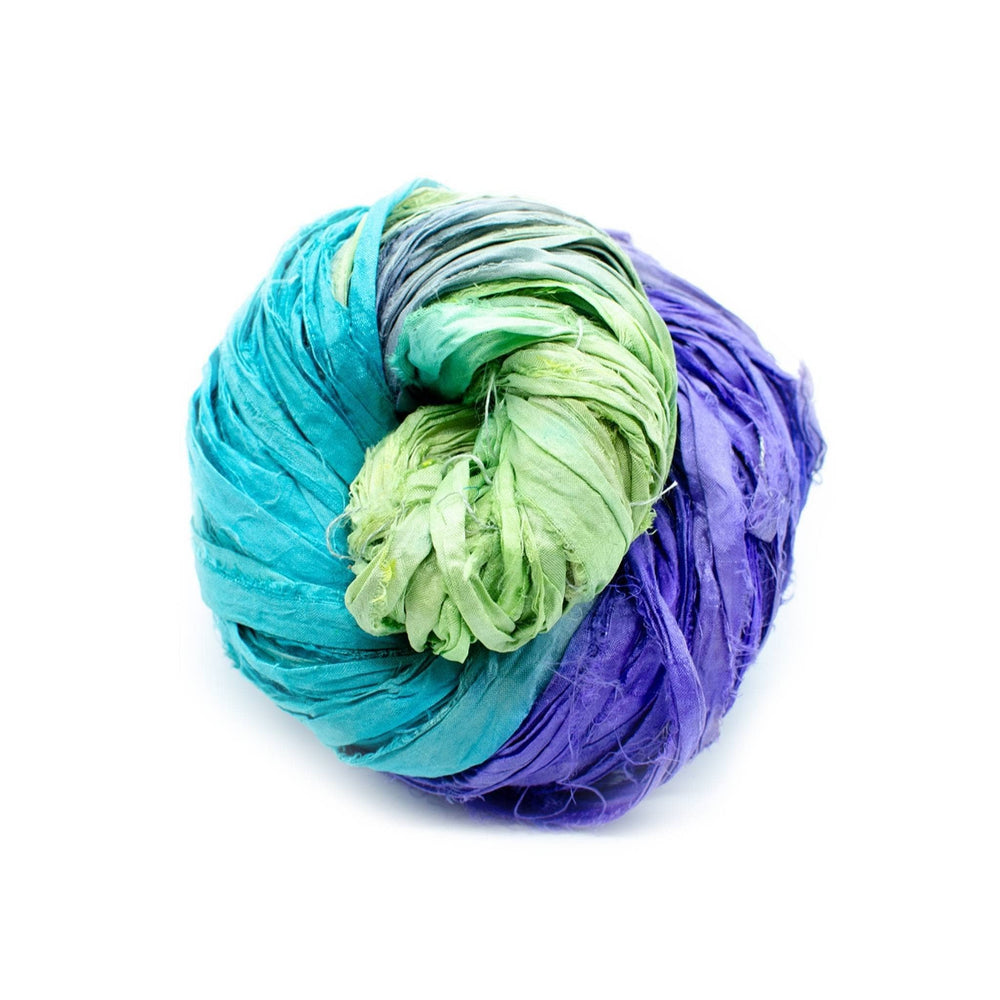
A smooth yarn makes the Vs easy to count. DGY's worsted weight yarn is the easiest to learn the chain on, and Darn Good Twist Sport Weight Silk Yarn is a good next step once your tension is steady. Both are recycled silk, hand-dyed by artisans in India. For the hook, see the crochet hooks collection.
If you'd like a new skein to practice on every month, Yarn of the Month sends three hand-dyed skeins with a knit and crochet pattern written for them, $29 a month plus shipping.
Crochet Starting Chain FAQ
Does the slip knot count as a chain?
No. Count only the V-shaped chains below the hook. The slip knot and the loop on the hook are not counted.
How many chains do I need to start?
Your pattern tells you. It's usually the number of stitches you want in Row 1 plus a turning chain (one for single crochet, two for half double, three for double crochet).
Why is my starting chain tighter than the rest of my crochet?
Most people pull the chain tighter than their stitches without noticing. Chain with a hook one size larger, or consciously keep the loops loose, and the bottom edge will stop pulling in.