Rewards



Yarn tension is how the yarn flows from your hand to your hook. Hold it right and every stitch comes out the same size, your rows stay straight, and your hands don't ache. Hold it wrong and the stitches wander, the edges wave, and the hook keeps slipping out.
It's the first skill in crochet and the one most beginners skip. The one thing that makes it work is this: the yarn is tensioned by your non-dominant hand, not by the hook hand pulling. The hook just scoops; the other hand controls the drag.
Watch: How to Hold Yarn Tension Video Tutorial
Watch where the yarn goes: twice around the pointer finger, past the pinkie, and how close the pinching fingers stay to the hook.
What You Need
A smooth, light-colored worsted weight yarn is the easiest to learn tension with: it slides at a steady rate and it's thick enough to feel. Very thin, fuzzy, or slippery yarn makes the drag harder to judge. A US H-8 (5 mm) hook is a comfortable match, and any hook style works; the yarn hold is the same.
Abbreviations (US terms): ch = chain, sc = single crochet, st(s) = stitch(es), YO = yarn over.
How to Hold Yarn Tension Written Steps
Supplies Needed: Yarn, Crochet Hook
Let's learn how to hold yarn tension when crocheting!
Step 1: Hold your crochet hook in your dominant hand. With your non-dominant hand, wrap the working end of the yarn around your pointer finger twice. Ensure that the yarn is coming between the middle and pointer finger.
Step 2: Scoop the working end of the yarn above your pinkie. This helps to create tension and control the flow of yarn.
Step 3: Finally, make sure you are positioned close enough to be able to pinch the yarn on your crochet hook comfortably, and start working!
By following these steps, you should be able to maintain proper tension in your yarn while crocheting, allowing for smoother and more controlled stitching.
Step-by-Step: How the Technique Works
- The pointer finger is the guide. The two wraps hold the yarn up and away from your palm, so the hook has a clear strand to scoop every time. The finger stays slightly raised, like you're pointing at the hook.
- The pinkie is the brake. Running the yarn over your pinkie adds drag. Squeeze the pinkie toward your palm for more, relax it for less. Once it's habit you'll adjust this without thinking.
- The pinch holds the work. Your thumb and middle finger pinch the fabric just below the hook, so the stitch you're working on stays put while the hook goes in and out.
- The hook hand doesn't pull. The hook scoops the strand and draws it through. If you're yanking with the hook hand, the tension hand isn't holding enough drag.
- Feed, don't fight. Let a little yarn slide past the pinkie with each stitch while the pointer finger stays in place. That steady flow is what makes every stitch the same size.
Tips and Common Mistakes
- Stitches too tight? Drop one of the two wraps on the pointer finger, or let the pinkie relax. Keep the loop on the hook the size of the hook's shaft, not its neck.
- Stitches too loose or uneven? Add the second wrap, run the yarn under the pinkie as well as over, and pinch the work closer to the hook. Loose stitches almost always come from a tension hand that's too far from the hook.
- Hands cramping? You're gripping, not tensioning. Loosen every finger except the pinkie and take a break every twenty minutes while the habit forms.
- Yarn slipping off your finger? Smooth or slippery yarn needs the double wrap. Some crocheters add a wrap around the pinkie too. The hold that lets the yarn flow evenly is the right one for you.
- Check with a swatch. Make ten rows of single crochet. If the edges are straight and the stitches look alike, your tension is working. If the swatch narrows or widens, that's tension, not counting.
When You'll Use This
Every stitch, every time. You'll notice tension most on your first beginner crochet projects: a washcloth that comes out square, a scarf with straight edges, a hat that matches the gauge in the pattern. It matters more as yarn gets thinner (lace and fingering show every wobble) and less as it gets thicker, which is one reason worsted and bulky yarns are good for learning.
Related Stitches
- Crochet Starting Chain — the first stitch to practice your new hold on
- Crochet Slip Stitch — the shortest stitch, and the one most affected by tight tension
- Double Crochet for Beginners — a taller stitch where even tension shows in straight rows
- Browse every crochet stitch tutorial
Yarn for This Stitch
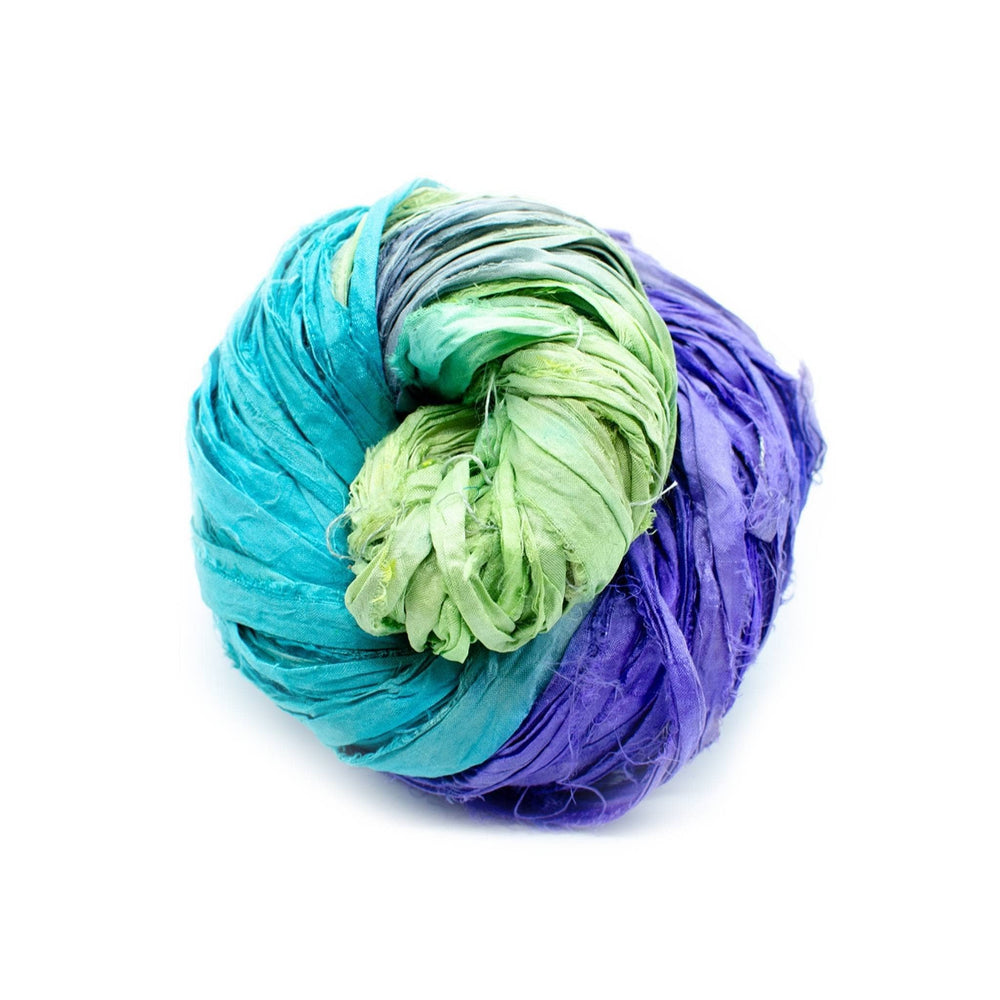
Learn tension on a smooth, medium-weight yarn. DGY's worsted weight yarn is the easiest to feel in the hand, and Darn Good Twist Sport Weight Silk Yarn is a good next step once your stitches are even. Both are recycled silk, hand-dyed by artisans in India.
If you'd like a new skein to practice on every month, Yarn of the Month sends three hand-dyed skeins with a knit and crochet pattern written for them, $29 a month plus shipping.
How to Hold Yarn Tension FAQ
Which hand holds the yarn in crochet?
The non-dominant hand. Right-handed crocheters hold the hook in the right hand and tension the yarn with the left; left-handed crocheters do the opposite. The videos above show both.
How tight should crochet tension be?
Tight enough that the yarn doesn't sag between your finger and the hook, loose enough that it slides when you pull a loop. The loop on your hook should be about the width of the hook's shaft.
Why does my crochet get tighter as I go?
Most people grip harder as they concentrate. Relax the pinkie every few stitches and keep the loop on the hook's shaft rather than its narrow throat.