Rewards



Single crochet (sc) is the shortest and sturdiest of the basic crochet stitches, and the first one most people learn. Each stitch is a small, tight V, and rows of it build a firm fabric with almost no holes.
That firmness is the point. Single crochet is what you use for amigurumi, bags, potholders, and anything that needs to hold a shape. It's also the base of dozens of textured stitches that only change where the hook goes in.
It's the first stitch to learn because it has only two motions: pull up a loop, then pull through both loops. Everything else in crochet adds a yarn over or a pull-through to that.
Watch: Single Crochet Video Tutorial
Watch which chain the first stitch goes into, how the hook goes under both top loops of each stitch, and how the chain 1 at the start of each row never gets worked into.
What You Need
Yarn: worsted weight, as in the swatch. Single crochet stitches are small, so a smooth, light-colored yarn makes the top loops easy to find. Dark or fuzzy yarn hides them.
Hook: 5.0mm (US H-8). If the fabric feels like cardboard, go up a size; sc tightens up fast.
Abbreviations (US terms): CH = chain; SC = single crochet; st(s) = stitch(es). In UK terms this stitch is called a double crochet.
Stitch multiple: any number of stitches, plus 1 extra chain for the first row. The swatch chains 21 to get 20 stitches.
Single Crochet Written Pattern
Tools & Materials: Worsted weight recycled silk; 5.0mm crochet hook
Pattern:
CH 21
Rows 1: In second CH from hook, SC and repeat across. Turn. (20 sts)
Rows 2 - 27: CH 1, SC across.
Bind off. Weave in ends. Block to 6x6" exactly.
Step-by-Step: How the Stitch Works
- Insert the hook. For Row 1, go into the second chain from the hook (the first chain becomes the turning chain). On later rows, slide the hook under both top loops of the next stitch, front to back.
- Yarn over and pull up a loop. Wrap the yarn over the hook and draw it back through the stitch. Two loops on the hook.
- Yarn over and pull through both loops. One loop remains. That's one single crochet. No yarn over happens before the hook goes in; that's what keeps the stitch short.
- Repeat to the end of the row. Work one sc into every stitch, including the very last one at the edge, which is easy to miss because it leans sideways.
- Chain 1 and turn. The chain 1 lifts the yarn to the height of the next row but does not count as a stitch. Work the first sc of the new row into the first stitch, right at the base of the chain, so every row has 20.
Tips and Common Mistakes
- Count every row for the first few swatches. Single crochet rows shrink when the last stitch is skipped, and grow when the chain 1 gets worked into. Twenty should stay twenty.
- Go under both loops. Working into only the back loop makes a ribbed, stretchy fabric. Fine when you want it, confusing when you don't.
- Loosen up. A tight single crochet fabric curls and strains your hand. Let the loop on the hook stay a little relaxed before each pull-through.
- Rows lean, and that's normal. Sc stitches sit slightly to one side, so a swatch can look like a parallelogram until it's blocked, which is why the pattern says to block to 6x6 inches.
- Right side: worked flat, sc is nearly reversible. In the round, the side facing you shows neat Vs and is the right side.
Single Crochet vs. Half Double Crochet
Half double crochet adds one yarn over before the hook goes in and then pulls through all three loops at once. That makes each stitch about half again as tall, with a softer, more flexible fabric. Single crochet stays shorter and firmer, so it's better for toys, bags, and edgings, while hdc is better for hats and blankets that need some give. The sc swatch here takes 27 rows to reach 6 inches; the half double crochet swatch takes 12.
What to Make With the Single Crochet Stitch
- Amigurumi and toys: sc in the round with a DK or worsted yarn makes a tight fabric that hides stuffing.
- Dishcloths and potholders: a 30-stitch sc square in cotton or worsted weight is a classic first project; the beginner crochet patterns guide has more.
- Baskets: sc in bulky yarn stands up on its own.
Related Stitches
- Starting Chain — the foundation every sc row is built on.
- Half Double Crochet — the next stitch up, with one yarn over added.
- Front Loop Single Crochet — the same stitch worked in one loop for a ridged fabric.
- Browse every crochet stitch tutorial
Yarn for This Stitch
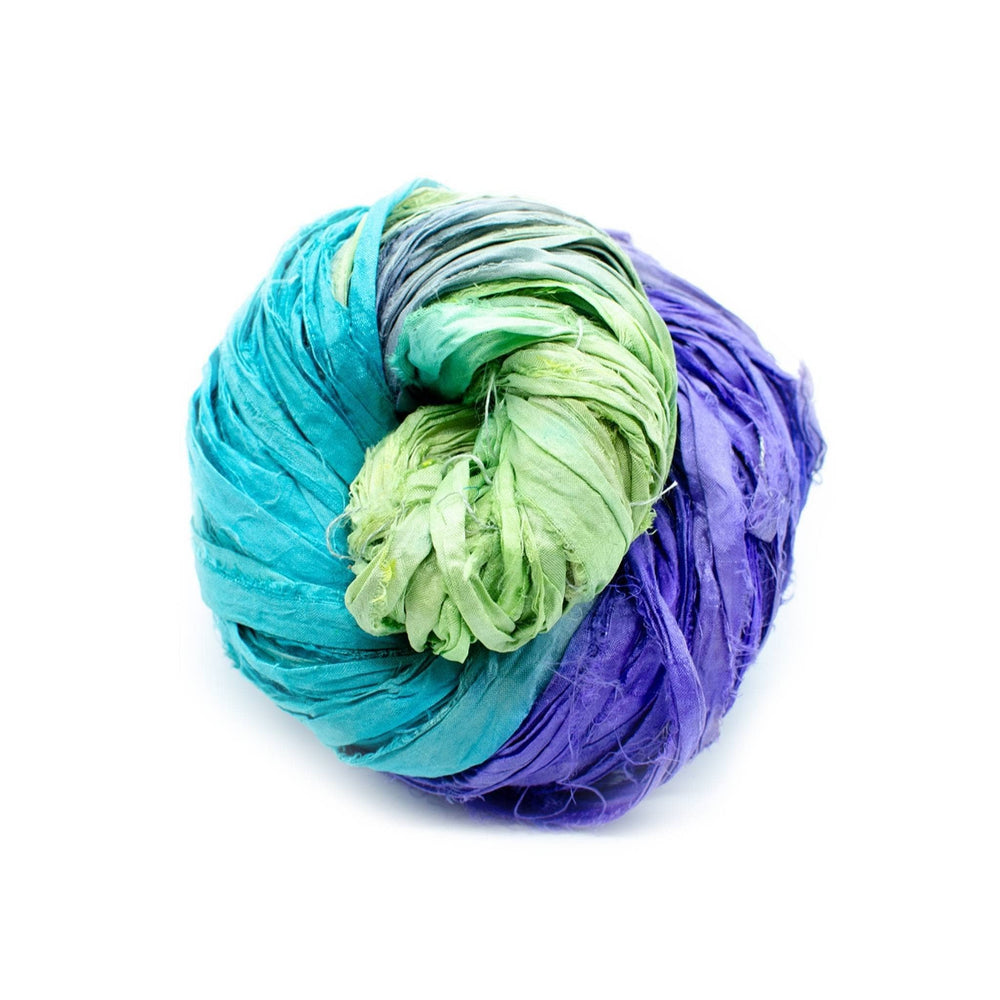
Single crochet is dense, so a lighter yarn keeps projects from going stiff. A sport weight silk, hand-dyed by artisans in India, makes a soft sc fabric for scarves and small bags. For toys and potholders, a worsted weight is sturdier.
If you'd like a new skein to practice on every month, Yarn of the Month sends three hand-dyed skeins with a knit and crochet pattern written for them, $29 a month plus shipping.
Single Crochet FAQ
Is single crochet the easiest crochet stitch?
Along with the chain and slip stitch, yes. It has only two motions and no yarn over before the hook goes in, which is why beginner tutorials start with it.
Why does my single crochet curl?
Tight tension. The stitches are short and packed close, and if each pull-through is snug the fabric bows. Loosen your grip, go up a hook size, or block the finished piece as this pattern suggests.
How much yarn does single crochet use?
More than taller stitches for the same area, because the fabric is so dense. If yardage matters, see which crochet stitches use the least yarn.