Rewards



Yarn weight is the thickness of the strand, and it's the first thing a pattern assumes you've matched. Get it right and the pattern works. Get it wrong and your hat fits a toddler or a watermelon.
The trouble is that there are three naming systems in use at once — a number scale, a set of US names, and a set of UK names — and labels mix them freely. This chart lines them up.
The yarn weight chart
| Category | US name | UK / AU name | Knit gauge (sts / 4 in) | Needle (US / mm) | Crochet hook (US / mm) |
|---|---|---|---|---|---|
| 0 | Lace | 1-2 ply, cobweb | 33-40 | 000-1 / 1.5-2.25 | Steel 6-8, B-1 / 1.6-2.25 |
| 1 | Super fine / fingering / sock | 4 ply | 27-32 | 1-3 / 2.25-3.25 | B-1 to E-4 / 2.25-3.5 |
| 2 | Fine / sport | 5 ply | 23-26 | 3-5 / 3.25-3.75 | E-4 to 7 / 3.5-4.5 |
| 3 | Light / DK | 8 ply | 21-24 | 5-7 / 3.75-4.5 | 7 to I-9 / 4.5-5.5 |
| 4 | Medium / worsted / aran | 10 ply | 16-20 | 7-9 / 4.5-5.5 | I-9 to K-10.5 / 5.5-6.5 |
| 5 | Bulky / chunky | 12 ply | 12-15 | 9-11 / 5.5-8 | K-10.5 to M-13 / 6.5-9 |
| 6 | Super bulky | 14 ply+ | 7-11 | 11-17 / 8-12.75 | M-13 to Q / 9-15 |
| 7 | Jumbo | Jumbo | 6 or fewer | 17+ / 12.75+ | Q+ / 15+ |
Gauge and tool ranges follow the Craft Yarn Council standard. The UK ply names are approximate — "ply" originally counted strands, and modern yarns don't always match.
How to read the label
Most labels now print a small skein icon with a number 0 to 7 inside it. That number is the category in the chart above, and it's the most reliable thing on the label. Beneath it you'll usually find a recommended gauge and needle or hook size. When the icon is missing, go by the gauge; when the gauge is missing, go by the name; when all three are missing, swatch.
The names that trip people up
- DK vs. sport. Neighbors, often confused. DK is one step thicker. We wrote a whole post on the difference.
- Worsted vs. aran. Both category 4. Aran is the heavier end. More on worsted here.
- "4 ply." In the UK it's fingering. In the US some labels use "4 ply" to mean four strands twisted together, at any weight. Ignore it and look at the gauge.
- Sock yarn. Almost always fingering, but some "sock" yarns are sport. Check the number.
How to substitute one weight for another
You can swap within a category freely (one worsted for another) once you've swatched. Swapping across categories is possible with three adjustments:
- Change tool size one step for each category you move. Going from DK to worsted, go up a needle size.
- Recalculate yardage. Thinner yarn needs more yards for the same project; thicker needs fewer. As a rough rule, moving one category changes yardage by 15 to 25 percent.
- Accept a different fabric. A lace shawl in worsted is a blanket. That might be what you want. It might not.
Holding two strands together is the classic trick: two strands of fingering roughly equal a DK; two strands of DK roughly equal a worsted or aran; two worsted make a bulky. Always swatch, because fiber changes the result.
Hand-dyed and recycled yarns
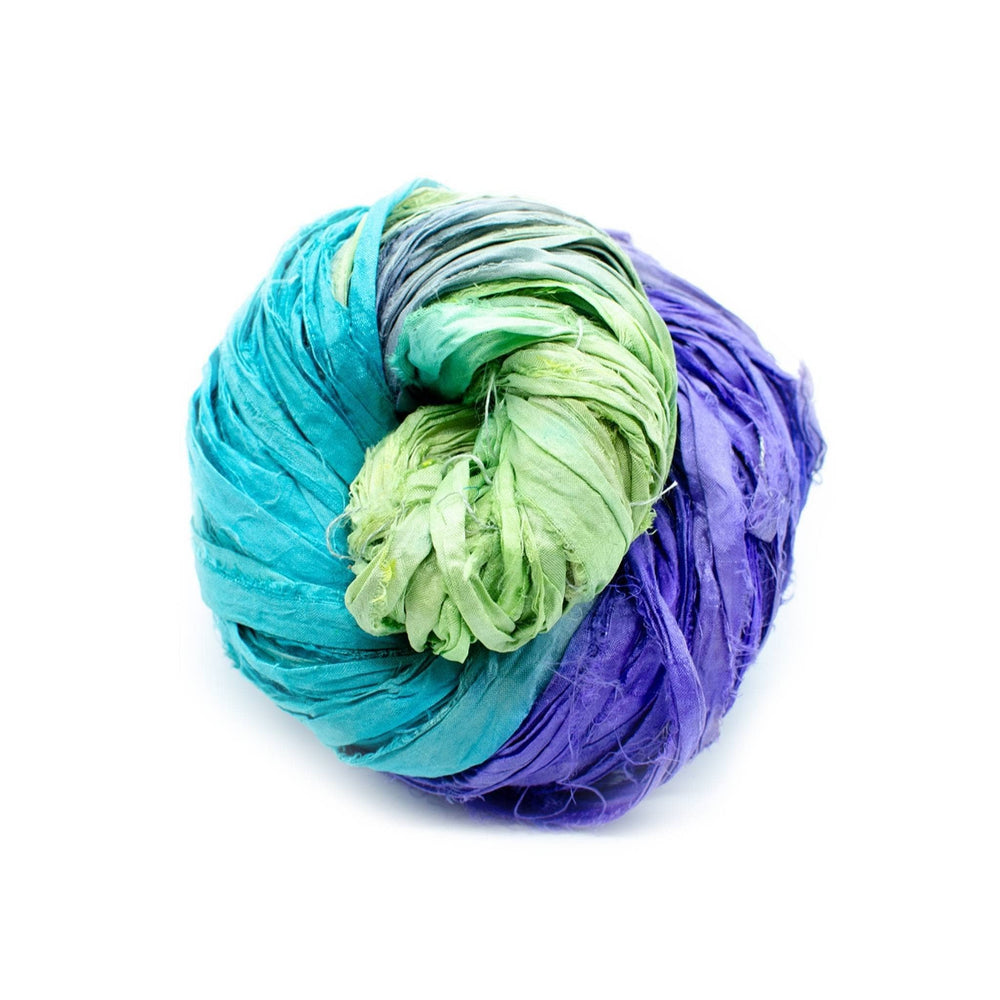
Small-batch yarn — hand-spun, hand-dyed — varies along the strand in a way mill yarn doesn't. A skein labeled worsted may run DK in places and aran in others. That's the character of it, and the fix is simple: swatch over 6 inches instead of 4, and let the average tell you the weight.
The silk yarns in our Yarn of the Month boxes are a good way to get comfortable with this. Three hand-dyed skeins a month in rotating weights, with a pattern written for that exact yarn, so you learn each weight by using it rather than reading about it. $29 a month plus shipping.
A quick way to remember the scale
Lace is thread. Fingering is socks. Sport is baby things. DK is light sweaters. Worsted is everything. Bulky is a weekend blanket. Super bulky is an arm-knit throw. Jumbo is a rope.
Yarn weight FAQ
What is the most common yarn weight?
Worsted (category 4). Most North American patterns are written for it, and most big-box yarn is worsted.
What does "ply" mean on yarn?
Originally the number of strands twisted together. In the UK and Australia it became a weight name (4 ply, 8 ply), which no longer reliably matches strand count. Use the category number or gauge instead.
How do I find the weight of yarn without a label?
Swatch it on the needles you'd use for your best guess and count stitches over 4 inches, then match the count to the chart. Wraps-per-inch on a ruler is a faster, rougher check.