Rewards



Joining in the round turns a straight crochet chain into a ring so you can work a tube instead of flat rows. Headbands, cowls, infinity scarves, hat bands, and basket sides all start this way.
The technique is beginner-level: chain, slip stitch into the first chain, and start working around. The one thing that makes it work is checking the chain isn't twisted before you join it. A twisted join can't be fixed later; you have to pull it out.
Watch: Join in the Round Video Tutorial
Watch how Julia lays the chain flat and checks for a twist before she slip stitches into the first chain.
What You Need
A smooth, light-colored worsted or DK weight yarn makes it easy to see whether the chain is twisted and to find the first chain when you join. Use the hook recommended for your yarn or pattern, and keep a stitch marker handy for the first stitch of each round.
Abbreviations (US terms): ch = chain, sl st = slip stitch, sc = single crochet, hdc = half double crochet, dc = double crochet, st(s) = stitch(es), rnd = round.
Join in the Round Written Steps
From the original post: Hello and welcome :) In this video Julia walks you through how to join in the round! This is helpful with any circular crochet project such as a headband or infinity scarf! Enjoy and happy crafting :)
Step 1: Chain the number of stitches your pattern calls for.
Step 2: Lay the chain flat and make sure it isn't twisted. The V-shaped tops of the chains should all face the same direction around the whole ring.
Step 3: Insert your hook into the first chain you made (the one next to the slip knot), yarn over, and pull through both the chain and the loop on your hook. This slip stitch closes the ring.
Step 4: Chain up for your first stitch (ch 1 for sc, ch 2 for hdc, ch 3 for dc) and work your first round into the chain stitches all the way around.
Step 5: At the end of the round, slip stitch into the first stitch of the round to join, then chain up again and begin the next round.
Step-by-Step: How the Technique Works
- Chain to length. Your chain is the full circumference, so count carefully. For a headband or cowl, hold the chain around your head or neck to check before joining.
- Lay it flat and look. Let the chain hang between your hands. If the Vs roll from front to back anywhere, untwist before you join.
- Slip stitch to close. Going into the very first chain and pulling a loop through everything on the hook makes a tight join with no gap. Don't go into the slip knot itself.
- Turning chain, then around. The turning chain lifts your yarn to the height of the stitch you're about to make. Then work one stitch into each chain around. In most patterns the turning chain doesn't count, so your first stitch goes into the chain you joined in.
- Join each round. Back at the start, slip stitch into the top of the first stitch (not the turning chain, unless the pattern says it counts). Chain up and go again. The joins line up in a faint seam.
Tips and Common Mistakes
- Check for twist twice. Once before the join, and once after the first few stitches of Round 1. A twist caught now is five minutes to redo.
- Mark the first stitch of every round so you know where to join.
- Joined rounds versus spiral. Joining with a slip stitch makes rounds with a visible seam; a continuous spiral has no seam but needs a marker. Use whichever the pattern names.
- The seam will lean. Joined rounds drift to one side. A short turning chain and a snug join keep it close to straight.
When You'll Use This
Anything shaped like a tube or a ring: headbands, ear warmers, infinity scarves, cowls, basket sides, sleeves, boot cuffs, and the brim-up start of a crochet beanie. Worsted weight suits most of these; bulky makes a fast cowl, and sport weight suits a narrow headband. Pieces that start at a center point, like a flat circle or a hat crown, use a magic ring instead.
Related Stitches
- Crochet Starting Chain — the chain you'll be joining
- Crochet Slip Stitch — the stitch that closes the ring and joins every round
- Working in the Opposite Side of the Chain — the other way to turn a chain into a round shape
- Browse every crochet stitch tutorial
Yarn for This Stitch
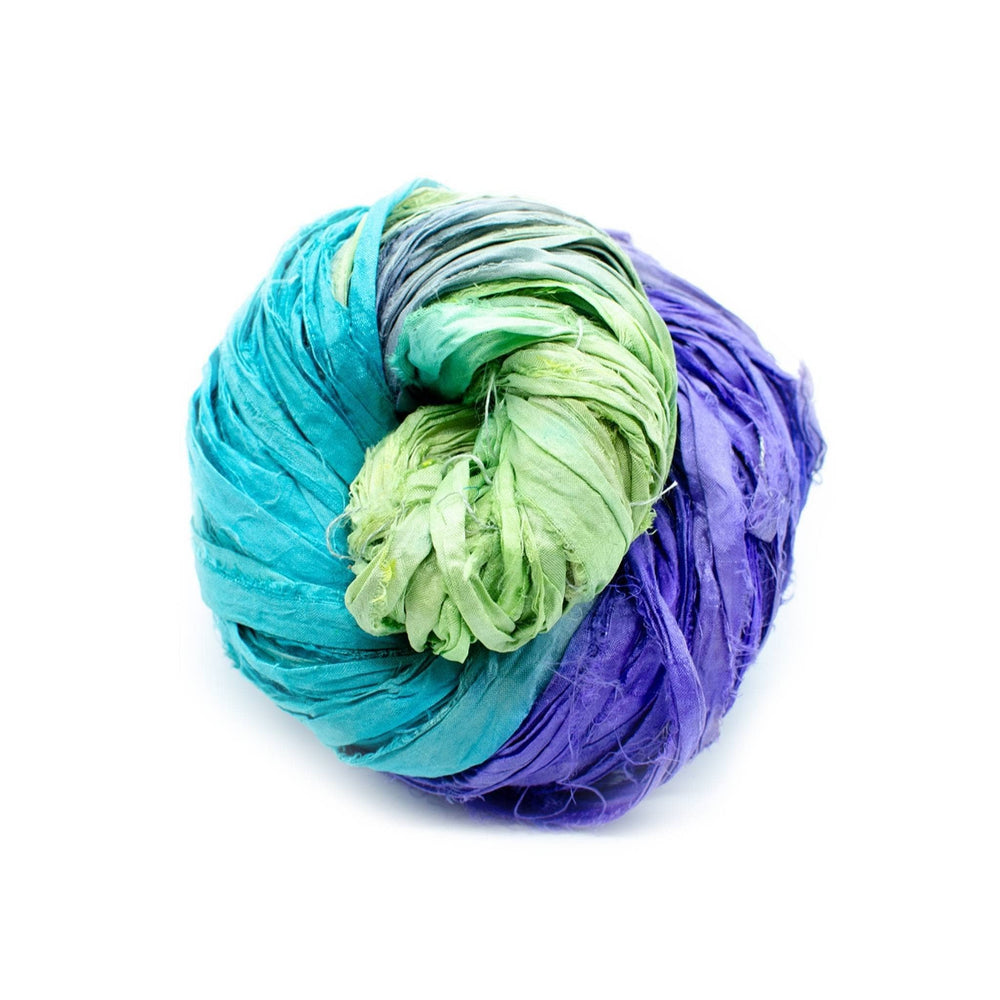
A smooth yarn makes the chain easy to inspect for twist. Darn Good Twist Sport Weight Silk Yarn suits headbands and cuffs; DGY's worsted weight yarn suits cowls and hat bands. Both are recycled silk, hand-dyed by artisans in India.
If you'd like a new skein to practice on every month, Yarn of the Month sends three hand-dyed skeins with a knit and crochet pattern written for them, $29 a month plus shipping.
Join in the Round FAQ
How do I know if my chain is twisted before joining?
Lay it flat and look at the tops of the chains. Each one has a V shape, and all the Vs should face the same way around the ring. If they flip somewhere, straighten the chain before you slip stitch.
Does the chain 3 count as a stitch when joining in the round?
It depends on the pattern. If it says the ch 3 doesn't count, work your first dc into the join stitch. If it counts, skip that stitch and join to the top of the chain at the end of the round.
What's the difference between joining in the round and a magic ring?
Joining a chain makes a ring with a hole in the middle, for tubes and bands. A magic ring closes tight for pieces that start at a center point.