Rewards



The slip stitch (sl st) is the shortest crochet stitch there is. It adds almost no height, which is exactly why it's useful: it joins rounds, closes rings, moves your yarn across a row without building fabric, and makes a firm, tidy edge.
It's a beginner stitch and it's quick. The one thing that makes it work is keeping it loose. A slip stitch pulled tight is hard to work into later and makes edges pucker. The second video below is worked left-handed.
Watch: Crochet Slip Stitch Video Tutorial
Watch how the yarn is pulled through the stitch and the loop on the hook in one motion; there's no separate yarn over in the middle.
What You Need
A smooth, light-colored worsted weight yarn makes the top loops easy to see and the stitch easy to keep loose while you're learning.
A US H-8 (5 mm) hook pairs well with worsted yarn. If your slip stitches come out tight, go up a hook size for the slip-stitch rows only.
Abbreviations (US terms): sl st = slip stitch, ch = chain, sc = single crochet, st(s) = stitch(es), YO = yarn over. Supplies: yarn and a crochet hook.
Crochet Slip Stitch Written Steps
Supplies Needed: Yarn, Crochet Hook
First, put your crochet hook in your dominant hand, and hold yarn tension in your non-dominant hand. Now you're ready to slip stitch!
Step 1: Dip the end of your crochet hook, and insert it through the top two loops of the previous row
Step 2: Yarn over, pull through, and immediately pull through the loop on the hook
This is a completed slip stitch.
Repeat as many times as needed to make your slip stitches.
Step-by-Step: How the Technique Works
- Insert. Push the hook under both top loops of the stitch (or chain) you're joining to. There's no yarn over before you insert, which is what keeps the stitch flat.
- Yarn over and pull through everything. Wrap the yarn, then draw it through the stitch and straight on through the loop that was on your hook. One motion, one loop left. That's the whole stitch.
- As a join. At the end of a round, slip stitch into the first stitch of the round. The yarn is now anchored there and you can chain up for the next round.
- As a way to travel. If a pattern says "sl st across 4 sts," you work four slip stitches to move the hook along the row without adding height, then start the real stitches where you need them.
- As fabric. Rows of slip stitch make a dense, firm fabric that looks a lot like knitting. It's slow and uses a lot of yarn, so it's usually reserved for edges, cuffs, and small pieces.
Tips and Common Mistakes
- Keep it loose. This is the stitch most beginners pull too tight. If you'll need to work into a slip stitch later (joining rounds, for example), it has to be loose enough to get a hook back into.
- Don't confuse it with single crochet. Single crochet has a yarn over in the middle and two steps; slip stitch is one pull-through. If your "slip stitches" are getting tall, you've added a step.
- Use it to finish an edge. A round of slip stitch around a blanket or washcloth firms the edge and stops it stretching. Work it a little looser than the body so it doesn't pull in.
- Back loop only for a ribbed look. Slip stitching into the back loop only makes a stretchy, ribbed fabric that's great for cuffs and hat bands.
- Yarn use is high in slip-stitch fabric. Because the stitch is so short, it uses more yarn per inch than single crochet. Plan for it on anything bigger than an edging.
When You'll Use This
Slip stitch shows up in nearly every pattern: joining rounds on a beanie, closing a magic ring, seaming granny squares, edging a blanket, moving across stitches to shape an armhole, and making ribbed cuffs in the back loop. For the stitch on its own, bulky and worsted yarns make a fast, firm fabric for coasters, headbands, and bag bases. Sport and DK weights make neat, flat edgings.
Related Stitches
- Crochet Starting Chain — the stitch to learn before this one
- Single Crochet Stitch — one step taller, the next stitch to learn
- Slip Stitch Back Loop Stitch — slip stitch worked as a ribbed fabric
- Join in the Round — the most common job for a slip stitch
- Browse every crochet stitch tutorial
Yarn for This Stitch
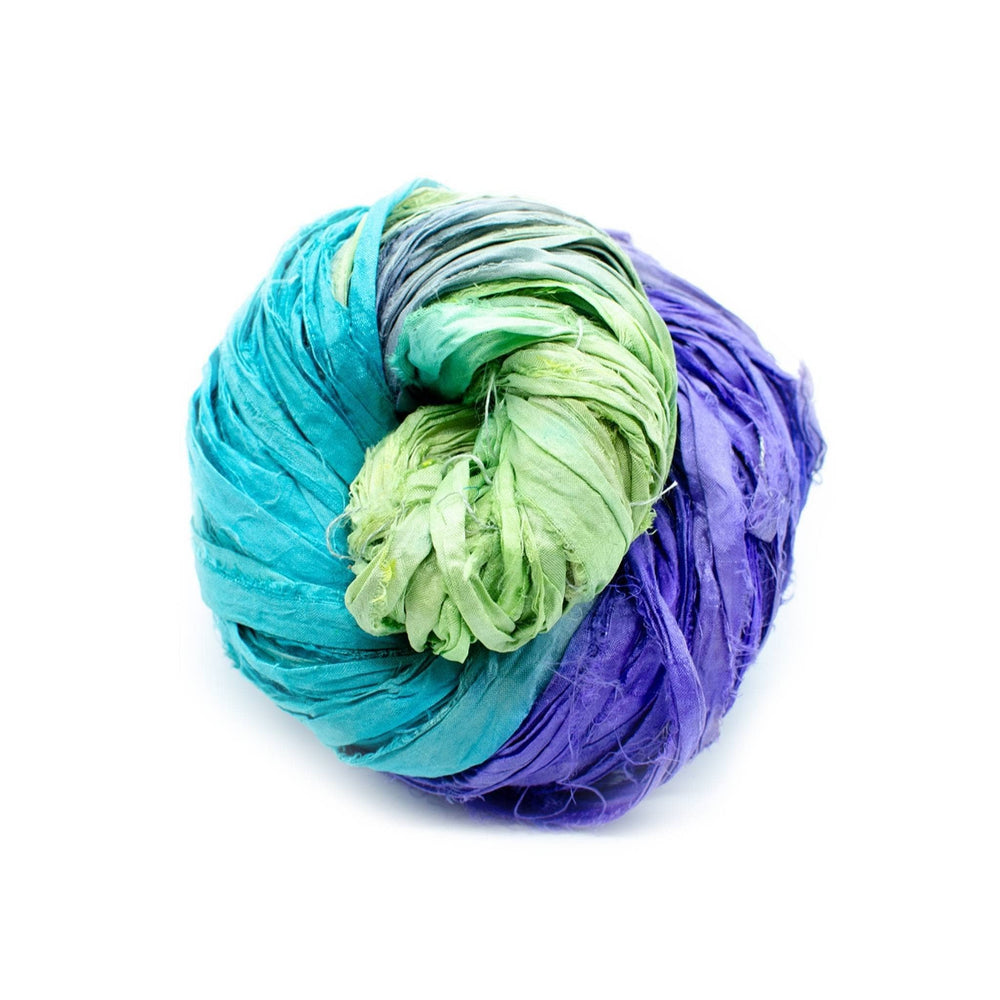
Slip stitch likes a smooth yarn that slides through tight loops. Darn Good Twist Sport Weight Silk Yarn makes neat edgings and cuffs, and DGY's worsted weight yarn is easier to keep loose while you're learning. Both are recycled silk, hand-dyed by artisans in India.
If you'd like a new skein to practice on every month, Yarn of the Month sends three hand-dyed skeins with a knit and crochet pattern written for them, $29 a month plus shipping.
Crochet Slip Stitch FAQ
What is a slip stitch used for in crochet?
Joining the end of a round to its start, closing a ring, moving the hook across stitches without adding height, seaming pieces together, and finishing edges. It's also worked in rows for a dense, knit-look fabric.
What's the difference between a slip stitch and a single crochet?
A single crochet pulls up a loop, yarns over, and pulls through two loops; it has height. A slip stitch pulls the yarn through the stitch and the loop on the hook in one go and adds almost no height.
Why are my slip stitches so tight?
The single pull-through makes it easy to cinch the loop down. Keep the loop on your hook relaxed, or go up a hook size for slip-stitch sections, and work them a little looser than your other stitches.