Rewards



Corded ribbing looks like 2x2 rib with a rope laid in each knit column. The cord comes from a small trick: you knit two stitches together through the back loop, then pick up the strand between stitches and knit it through the back loop too. That decrease-and-pick-up pair twists the column into a cord.
It's listed as beginner because there's only one row to learn and you repeat it on every row. The fabric is firm, stretchy and thick, which makes it a good choice for hat brims, cuffs, headbands and scarves that need body.
The one thing that makes it work: the pick-up. Knitting the strand between stitches through the back loop replaces the stitch you lost in the decrease and twists it, so the count stays the same and the cord stands up.
Watch: Corded Ribbing Video Tutorial
Watch where the needle picks up the strand. It's the horizontal bar between the stitch you just decreased and the next stitch on the left needle, and it's knit through the back to twist it closed.
What You Need
The swatch uses worsted (medium) weight yarn on 5.0mm (US 8) needles. Twisted stitches tighten the fabric, so a medium weight on a medium needle keeps it from going stiff. A smooth, light-colored yarn shows the cords best while you're learning.
Abbreviations used: CO (cast on), K (knit), P (purl), K2tog tbl (knit two together through the back loop), PU (pick up the strand between stitches), tbl (through the back loop). The stitch is worked over a multiple of 4 + 2; the swatch casts on 26.
Corded Ribbing Written Pattern
Size: 6"x6"
Gauge: 4x4 = 16sts by 20 rows in stockinette
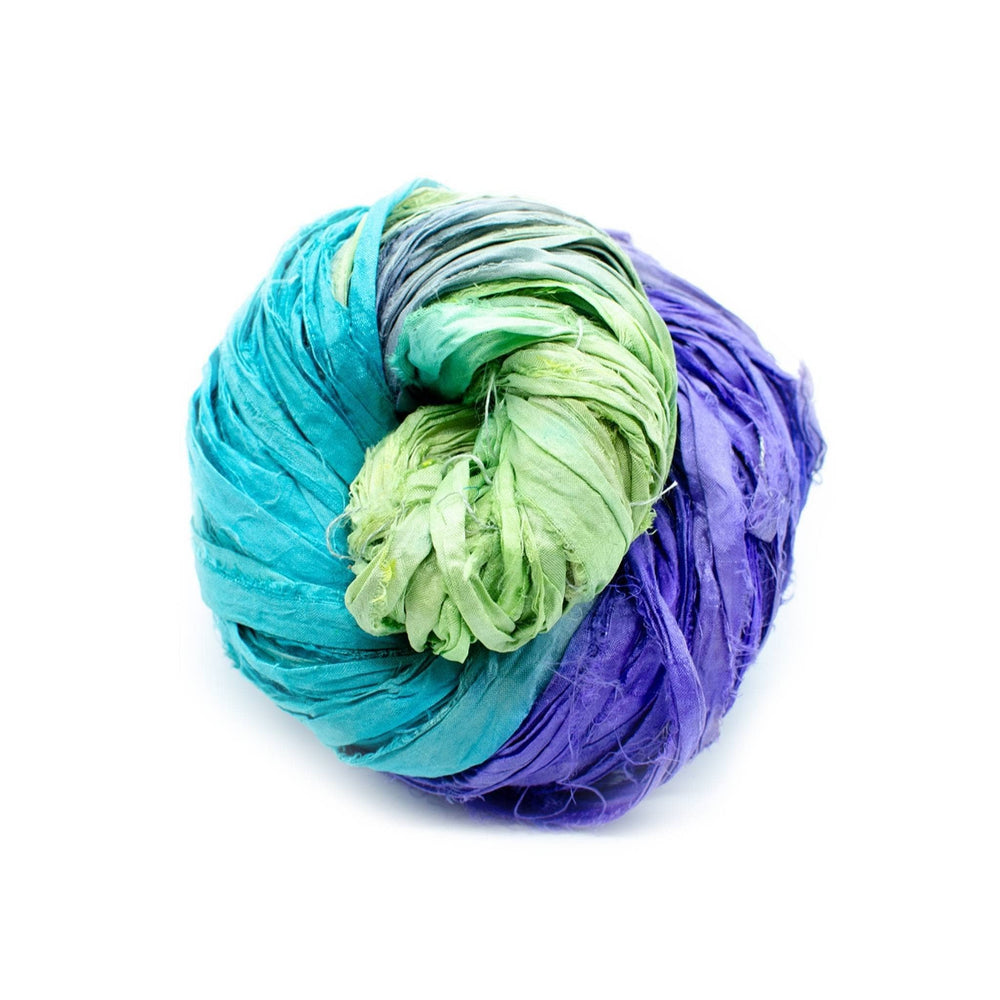
Yarn: 22g of DGY worsted weight recycled silk
Knitting Needle Size: 5.0mm
Abbreviations: K: Knit; P: Purl; K2TOG TBL: Knit two together through the back loop; PU: Pick up; TBL: Through the back loop
CO 26
Row 1: K1, *K2tog tbl, PU 1 and K tbl, P2. Repeat from * to last st. K1.
Rows 2-25: Repeat row 1.
Step-by-Step: How the Stitch Works
- Cast on 26. Knit the first stitch for the edge.
- Put the right needle into the back loops of the next two stitches, from right to left, and knit them together. Two stitches become one, twisted.
- Find the horizontal strand running between the stitch you just made and the next stitch on the left needle. Lift it onto the left needle with the right needle tip, then knit it through the back loop. You're back to two stitches, and the pair is corded.
- Purl two. Repeat the decrease, pick-up and purl 2 across to the last stitch, then knit it.
- Turn and work the same row again. Because the row is identical every time, the corded columns on this side land where the purl columns were on the other side, and each side ends up with its own set of cords.
Tips and Common Mistakes
- Always knit the picked-up strand through the back loop. Knitting it through the front leaves a small hole under each cord.
- Count at the end of every row. If you have 25 stitches, you missed a pick-up; 27 means you picked up twice. Both are easy to fix on the next row.
- Don't tighten the k2tog tbl. It's already a firm stitch, and a tight one makes the strand hard to find.
- Both sides show cords, so the fabric is reversible. The cords on each side sit in different columns, which is fine for a scarf.
- Corded ribbing pulls in like any rib and doesn't curl. Block it to the width you want rather than stretching it.
What to Make With Corded Ribbing
A hat brim in worsted weight is the quickest way to use it: the cords show well on a snug band and the rib grips. Pair it with a stockinette crown, following our how to knit a hat guide for the decreases.
It's also a good reversible scarf stitch in bulky yarn, a headband in worsted, sweater cuffs and hems in the body yarn, and a fingering weight sock cuff where the twisted stitches add durability.
Related Stitches
- Knit Rib Stitch — plain 2x2 rib, the base this grows from
- Baby Cable Ribbing — another small twist in a 2x2 rib column
- Braided Ribbing — a more complex twisted-column rib
- Browse every knit stitch tutorial
Yarn for This Stitch
A smooth worsted weight yarn with a round, firm twist shows the cords clearly and makes the pick-up strand easy to find. Darn Good Yarn's recycled silk, hand-dyed by artisans in India, comes in weights from lace through super bulky; a bulky weight makes a thick, reversible scarf in this stitch in a few evenings.
If you'd like a new skein to practice on every month, Yarn of the Month sends three hand-dyed skeins with a knit and crochet pattern written for them, $29 a month plus shipping.
Corded Ribbing FAQ
Is corded ribbing reversible?
Yes. Because every row is the same, each side gets its own corded columns, in alternating positions. Both sides look finished.
Does corded ribbing stretch like regular rib?
It stretches, but a little less. The twisted stitches firm up the knit columns, so it grips well on brims and cuffs.
How much yarn does corded ribbing use?
More than plain rib, since every column is twisted and the fabric is thick. The 6-inch swatch used 22g of worsted weight.