Rewards



The diagonal basketweave stitch makes a fabric that looks woven rather than knit. Every row crosses pairs of stitches, and the crosses lean the same direction, so the surface has a diagonal grain like a woven basket or a tweed.
It's dense, firm and barely stretches, which makes it right for bags, cushion covers and placemats. It's intermediate because of the twisted stitches worked out of order; the motion feels awkward for a few rows and then settles.
The one thing that makes it work: knitting the second stitch before the first. On every pair, you work the stitch farther from the needle tip first, then the nearer one, and drop both together. That out-of-order knit is what crosses them.
Watch: Diagonal Basketweave Stitch Video Tutorial
Watch the right needle go behind the first stitch to reach the second on Row 1, and in front of it on Row 2. Both stitches stay on the left needle until the pair is done.
What You Need
The swatch uses worsted (medium) weight yarn on 5.0mm (US 8) needles. Twisted, crossed stitches tighten the fabric, so don't go down a needle size here; if anything, go up. A smooth, light-colored yarn shows the diagonal lines best while you're learning, and a yarn with some give makes the crosses easier to work.
Abbreviations used: CO (cast on), K (knit), P (purl), Sl (k) (slip one stitch as if to knit), Sl (p) (slip one stitch as if to purl), tbl (through the back loop). The swatch casts on 29: two slipped edge stitches, pairs across, and one final stitch.
Diagonal Basketweave Stitch Written Pattern
Size: 6"x6"
Gauge: 4x4 = 16sts by 20 rows in stockinette
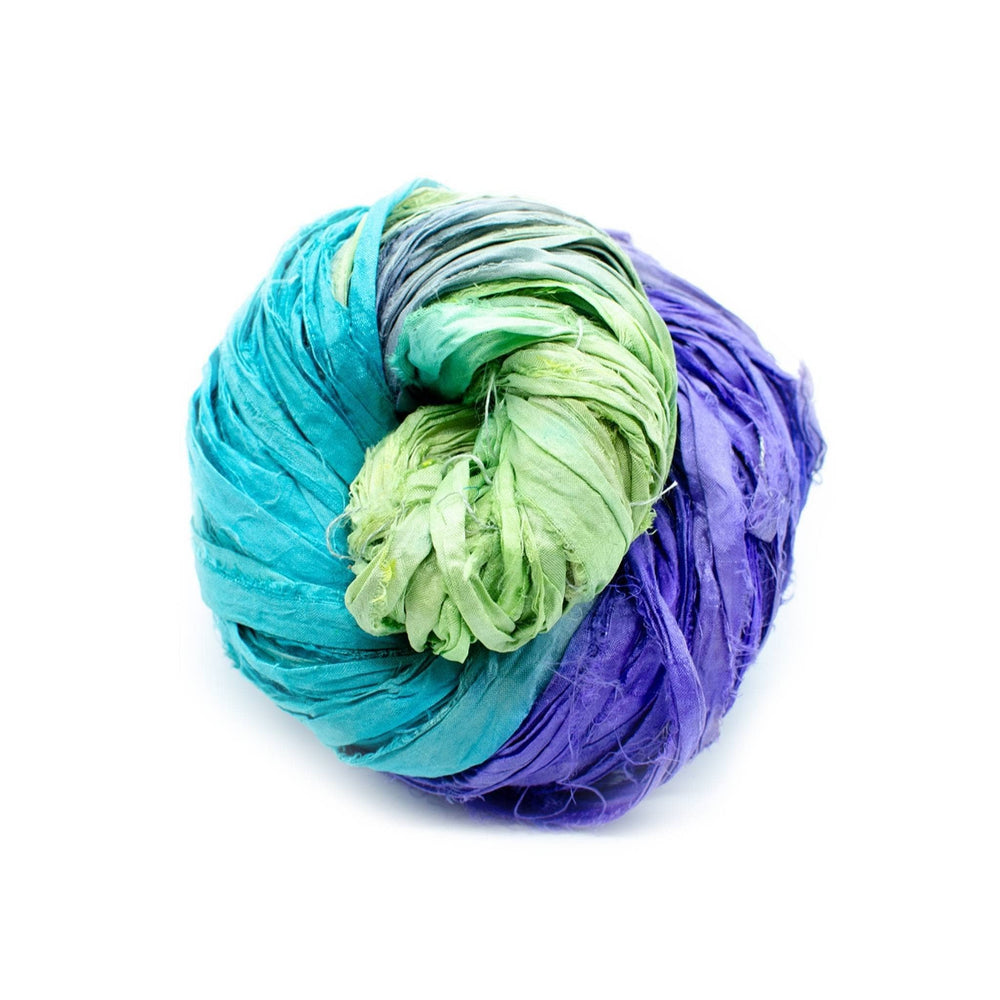
Yarn: 22g of DGY worsted weight recycled silk
Knitting Needle Size: 5.0mm
Abbreviations: K: Knit; P: Purl; Sl (p): Slip Stitch as if to purl; Sl (k): Slip Stitch as if to knit
CO 29
Row 1: Sl 1(k), sl1(p), k1 through back in second on left hand needle-keeping the loop on the left needle, k1 through back in first on left needle, drop off both loops off left hand needle. Repeat across to last stitch. K1.
Row 2: Sl 2 (p), p1 in second from left needle, do not cast off loop, p1 in first on left needle, cast off both loops. Repeat across to last, P1.
Rows 3-32: Repeat rows 1-2.
Step-by-Step: How the Stitch Works
- Cast on 29. Row 1 is the right side. Slip the first stitch knitwise and the second purlwise. These two slipped stitches make a neat edge.
- Take the right needle behind the first stitch on the left needle and into the back loop of the second stitch. Knit it, but leave both stitches on the left needle.
- Now knit the first stitch through its back loop, and let both stitches slide off together. The pair has crossed, with the second stitch lying over the first. Repeat this across to the last stitch and knit it.
- Row 2 is the wrong side. Slip two purlwise, then purl the second stitch on the left needle first (reach in front of the first stitch), keep it on the needle, purl the first stitch, and drop both. Repeat to the last stitch and purl it.
- Repeat the two rows. Because the pairs cross on both sides and the edge slips offset the pairs by one each row, the crosses line up on a diagonal instead of in columns.
Tips and Common Mistakes
- Keep the previous row loose. A tight row makes it hard to reach the second stitch. Go up a needle size if it fights you.
- Count pairs. If you end a row with two leftover stitches instead of one, you skipped a cross somewhere.
- The right side is the Row 1 side with the clear diagonal lines. The wrong side shows a bumpier version of the same slant.
- This stitch pulls in a lot. Expect it to come out narrower than stockinette on the same stitch count, so swatch before sizing a bag.
What to Make With the Diagonal Basketweave Stitch
Bags come first. The fabric is firm enough that a worsted weight tote needs no lining to hold its shape, and the woven look suits a market or project bag. Cushion covers in worsted or bulky weight show the diagonal well on a flat surface.
It also works for placemats in a cotton or wool worsted, a structured clutch in sport or DK weight, and a dense headband. A strap in the same stitch barely stretches; the yarn weight chart helps you pick a weight for each part.
Related Stitches
- Knit Basketweave Stitch — the knit-purl block version with the same woven look
- Knit Herringbone Stitch — another out-of-order stitch with a slanted grain
- Knit Wrap Mock Cable Stitch — more practice crossing stitches without a cable needle
- Browse every knit stitch tutorial
Yarn for This Stitch
Stick with the swatch's worsted weight yarn for bags and cushions; a medium weight with some bounce makes the crosses easier to work and keeps the fabric from going board-stiff. Darn Good Yarn's recycled silk, hand-dyed by artisans in India, comes in weights from lace through super bulky, and the bulky weights make a quick, sturdy tote in this stitch.
If you'd like a new skein to practice on every month, Yarn of the Month sends three hand-dyed skeins with a knit and crochet pattern written for them, $29 a month plus shipping.
Diagonal Basketweave Stitch FAQ
Is the diagonal basketweave stitch reversible?
No. The right side shows the clean diagonal weave; the wrong side has the same slant but a rougher texture. Both lie flat.
Does it curl?
Very little. The crossed stitches lock the fabric and the slipped edges stay neat, so it needs no border.
Why is my fabric so stiff?
That's the stitch: crossed and twisted stitches have no room to move. Go up a needle size or two for a softer fabric, or keep the stiffness for bags.