Rewards



Slip stitch ribbing is a 2x1 rib with a twist: the single knit column between each pair of purls is slipped every other row instead of knitted. That slipped stitch stretches across two rows, so the knit column stands up taller and tighter than it would in plain rib, and the whole fabric pulls in with more spring.
It looks like a crisp, deeply grooved rib on the right side. The slipped columns read as long, smooth Vs, and the purl grooves between them sit low. It's a good choice when you want ribbing that holds its shape on a cuff, hem, or hat brim.
It's rated intermediate only because you have to move the yarn out of the way before you slip. Once that's in your hands, it's a two-row repeat.
Watch: Slip Stitch Ribbing Video Tutorial
Watch where the yarn sits when the stitch is slipped on Row 1 and how the slipped stitch gets worked as a normal purl on Row 2.
What You Need
A worsted weight yarn on 5.0mm (US 8) needles matches the swatch below. A smooth, light-colored yarn shows the slipped columns best while you're learning; a dark or fuzzy yarn hides the groove you're trying to see.
Abbreviations: CO = cast on; K = knit; P = purl; sl(p) = slip one stitch purlwise (insert the right needle as if to purl and move the stitch over without working it).
Stitch multiple: multiple of 3 + 2. The swatch casts on 26: P2 at the start, then eight repeats of (slip 1, P2). If you'd like the full list of knitting terms, see 70 knitting abbreviations every knitter should know.
Slip Stitch Ribbing Written Pattern
Size: 6"x6"
Gauge: 4x4 = 16sts by 20 rows in stockinette
Yarn: 26g of DGY worsted weight recycled silk
Knitting Needle Size: 5.0mm
Abbreviations: K: Knit; P: Purl; Sl(p): slip as if to purl
CO 26
Row 1: P2, *sl(p), P2 repeat from * across
Row 2: K2, *P, K2, repeat from * across
Rows 3-32: Repeat rows 1 and 2
Bind Off.
Step-by-Step: How the Stitch Works
- Cast on 26 stitches. Row 1 starts with two purls, so the yarn is in front of the work.
- For the slip, move the yarn to the back between the needles, then insert the right needle into the next stitch as if to purl and slide it across unworked. Bring the yarn to the front again and purl two. The yarn needs to travel across the back of the slipped stitch so the float stays hidden on the wrong side.
- Repeat (slip 1, P2) across the row. You'll finish with P2.
- Row 2 is the plain row: K2, then purl the stitch you slipped, then K2. Keep going across. The purl here lands on top of the slipped stitch, which is what pulls it up into that long V.
- Repeat those two rows. Every slipped column stacks on itself, and the K2/P2 columns on the other row build the grooves on either side of it.
Tips and Common Mistakes
- Don't tug the yarn when you move it to the back for the slip. A tight float pulls the slipped stitch down and the fabric puckers; let it lie flat.
- The right side is the face where the slipped stitches show as tall, smooth knit columns. Row 1 is worked on that side.
- If your columns look uneven, you probably knitted a slipped stitch by accident. Count on Row 2: the stitch between each K2 should be a purl, and it should be the slipped one.
- This rib pulls in more than a standard 2x1 rib and uses a little less yarn per row, since one stitch in three isn't worked on Row 1. Swatch before you plan a sweater hem with it.
- Slip purlwise, not knitwise. Slipping knitwise twists the column and the clean V disappears.
What to Make With Slip Stitch Ribbing
Use it anywhere you'd normally put ribbing but want more grip and more texture: a hat brim in worsted weight, sock cuffs in fingering weight, or the hem and cuffs of a cardigan in DK. Because it stands up on its own, it also makes a good all-over fabric for a scarf; a worsted weight scarf with a 3-stitch garter border is a simple first project. If a hat is on your list, the construction notes in how to knit a hat pair well with this brim.
Related Stitches
- Knit 1x1 Rib Stitch — the plain rib to learn first.
- Corded Ribbing — another textured rib with the same 2-row rhythm.
- Slip Stitch Honeycomb — a garter-based slip stitch pattern, if you like what slipping does.
- Browse every knit stitch tutorial
Yarn for This Stitch
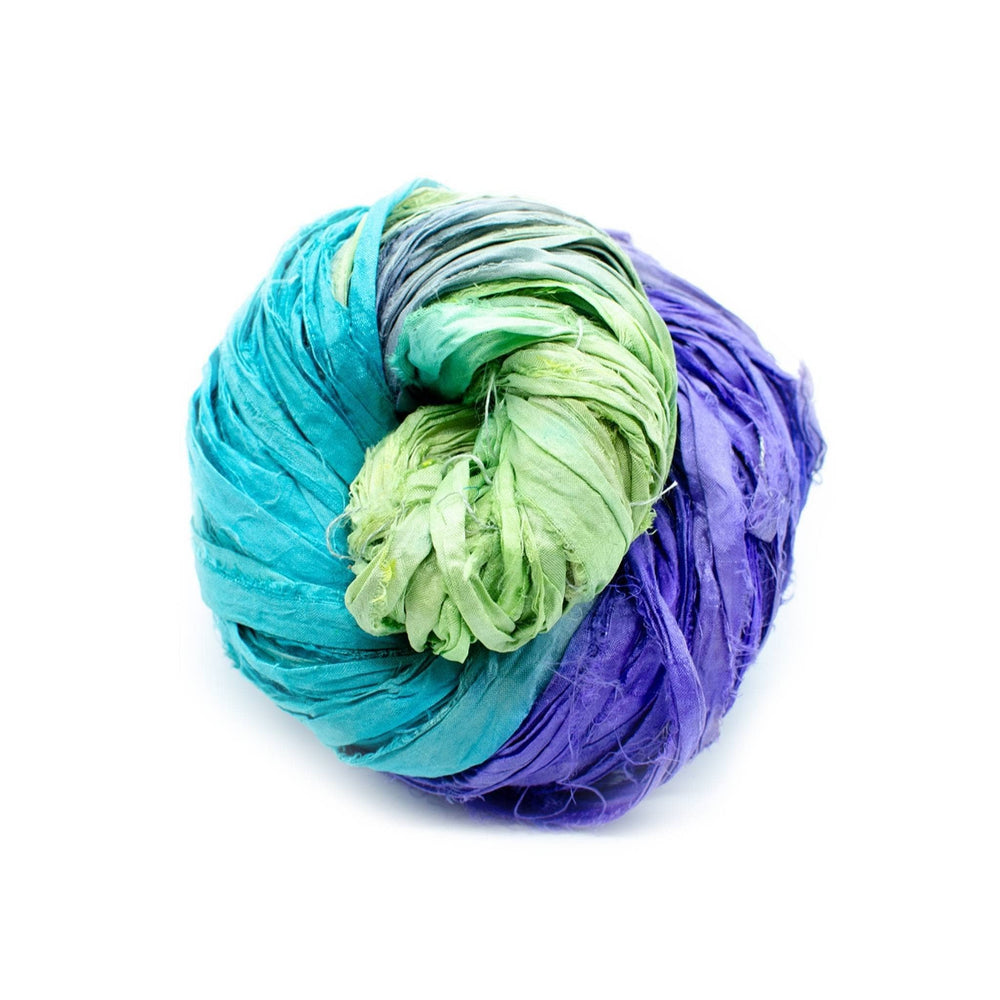
The swatch uses worsted weight recycled silk, and the firm twist of a worsted weight yarn gives the columns good definition. For a lighter cuff or sock, a sport weight works too; the slipped columns just get finer. Darn Good Twist Sport Weight Silk Yarn, hand-dyed by artisans in India, is a good swatch yarn at that weight.
If you'd like a new skein to practice on every month, Yarn of the Month sends three hand-dyed skeins with a knit and crochet pattern written for them, $29 a month plus shipping.
Slip Stitch Ribbing FAQ
Is slip stitch ribbing reversible?
No. The slipped columns show as tall Vs on the right side; the wrong side looks like an ordinary purl-heavy rib with small floats behind the slipped stitches.
Does slip stitch ribbing stretch as much as regular rib?
It stretches, but it also springs back harder because the slipped stitches shorten the fabric. Expect less total stretch than 1x1 rib and a firmer grip.
What's the difference between this and 2x1 rib?
Same stitch layout, but in 2x1 rib the knit column is worked every row. Here it's slipped every other row, which makes that column longer, tighter, and more raised.