Rewards



The silt stitch is a two-row texture that looks like layers of sediment, which is where the name comes from. One row is plain double crochet. The next row is a series of small groups, a single crochet and two double crochets worked into the same stitch, with two stitches skipped between groups.
It's a beginner stitch with a lot of visual payoff. The plain dc rows give it structure and speed; the group rows give it a slanted, shingled surface. It works for scarves, blankets, cushion covers and dishcloths, and it makes a good first "textured" stitch after you've learned the basics.
The one thing that makes it work: the groups lean. Because each sc-and-2dc group sits in one stitch and spans two skipped stitches, the two dc fan to one side. Every group row leans the same way, so the texture reads as a diagonal.
Watch: Silt Stitch Video Tutorial
Watch how each group starts with a single crochet and the two double crochets go into that same stitch, then the hook skips two before the next group.
What You Need
The swatch uses worsted (medium) weight yarn and a 4.5mm (US 7) hook. A medium weight keeps the groups defined without making the dc rows stiff. A smooth, light-colored yarn shows the layered texture best while you're learning.
Abbreviations used (US terms): CH (chain), SC (single crochet), DC (double crochet), SK (skip), TC (turning chain). The group row works in sets of three stitches, so a chain that's a multiple of 3 keeps the repeat even; the swatch chains 27.
Silt Stitch Written Pattern
Size: 6"x6"
Gauge: 4x4 in DC = 11sts x 8 rows
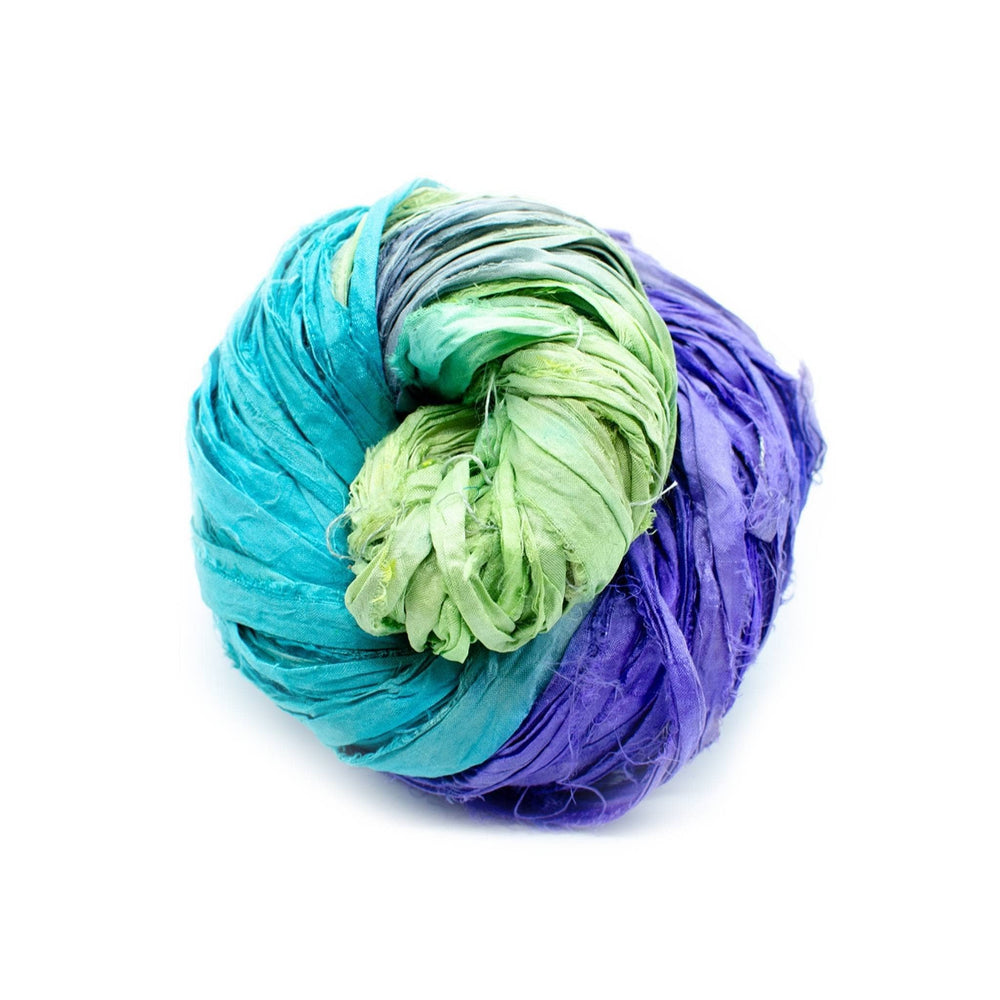
Yarn: 22g of DGY worsted weight recycled silk
Crochet Hook Size: 4.5mm
Abbreviations: CH - Chain; DC - Double Crochet; SC - Single Crochet; SK - Skip a Stitch; TC: Turning Chain
CH 27
Row 1: Working into the 4th CH from hook, DC. DC in each stitch across. Turn.
Row 2: CH1 (counts as 1 SC), 2DC in same stitch, sk 2, *[SC, 2 DC] in same stitch sk 2. Repeat from * across until 3 sts remain. SC into last stitch. Turn.
Row 3: CH 3, sk 1, DC in each across.
Rows 4-14: Repeat Rows 2-3.
Step-by-Step: How the Stitch Works
- Row 1 is a foundation of double crochet. Chain 27, dc into the fourth chain from the hook, and dc in every chain across. Turn.
- Row 2 is the group row. Chain 1 (it counts as the first sc), then work two dc into the same first stitch. Skip two stitches.
- Into the next stitch, work a single crochet and two double crochets. Skip two. Repeat this group-and-skip across until three stitches remain, then single crochet into the last stitch. Turn.
- Row 3 goes back to plain dc. Chain 3, skip one, then dc into every stitch across, working into the tops of the sc and dc from the group row. This flattens the row and sets up a clean base for the next groups.
- Repeat Rows 2 and 3. Each group row adds a band of slanted shingles, and each dc row adds a smooth band between them.
Tips and Common Mistakes
- On the group row, all three stitches of a group go into the same stitch. Splitting them across two stitches loses the fan and throws off the count.
- Count your dc row. If Row 3 comes out with fewer stitches than Row 1, you probably missed the sc at the very end of the group row.
- The groups lean toward the direction you're crocheting. The right side is the side where the group rows all lean the same way and look like overlapping scales.
- Keep the chain-3 at the start of the dc row firm so the edge doesn't develop a ladder of loose loops.
- The dc rows curl slightly on their own, but the group rows hold them flat. If a scarf still curls, add a round of single crochet around the edge.
What to Make With the Silt Stitch
A scarf in worsted weight is the easiest start: the two-row repeat is quick to memorize and the texture looks finished with a simple sc border. For a blanket, bulky yarn makes the shingles large and the dc rows fast, and the chunky blanket yarn guide helps with how much to buy.
Other good fits: cotton DK dishcloths, a sport or DK weight cowl, a worsted weight cushion front, and a baby blanket in a soft DK where the small groups stay close and warm.
Related Stitches
- Double Crochet Stitch — half of this pattern is plain dc rows
- Singles and Doubles Stitch — another sc-and-dc combination with a different rhythm
- Lemon Peel Stitch — a flatter sc/dc texture to try next
- Browse every crochet stitch tutorial
Yarn for This Stitch
The swatch uses a worsted weight; a smooth worsted weight yarn is the right pick for scarves and blankets in this stitch. For a lighter cowl or a garment, Darn Good Twist Sport Weight Silk Yarn keeps the groups small and drapey, and the recycled silk is hand-dyed by artisans in India.
If you'd like a new skein to practice on every month, Yarn of the Month sends three hand-dyed skeins with a knit and crochet pattern written for them, $29 a month plus shipping.
Silt Stitch FAQ
Is the silt stitch reversible?
Not quite. Both sides are textured, but the group rows lean more clearly on the right side. The back is tidy enough for a scarf.
Does the silt stitch use a lot of yarn?
About the same as plain double crochet. The group rows pack three stitches into one spot but skip two, so it balances out. The 6-inch swatch used 22g of worsted.
Is the silt stitch beginner-friendly?
Yes. It uses only chain, single crochet and double crochet, and the two-row repeat is easy to memorize.