Rewards



Slip stitch back loop crochet is the simplest crochet stitch worked into only the back loop of each stitch. Row after row, it builds a fabric of fine horizontal ridges that stretches like knit ribbing. From a few feet away it passes for knitting.
It's a beginner stitch. There's no yarn over and nothing to count beyond the stitches themselves. It's the standard way to crochet cuffs, hat brims, and sweater hems that need to stretch and recover.
The one thing that makes it work is a loose hand. Slip stitches pulled tight make a stiff, narrow board; slip stitches worked loosely make a soft, springy rib.
Watch: Slip Stitch Back Loop Video Tutorial
Watch which loop Mike's hook goes under at the start of Row 2, and how little he tightens each stitch before moving on.
What You Need
Yarn: medium (worsted) weight, as the swatch calls for. A smooth, light-colored yarn shows the two loops at the top of each stitch clearly, which matters here because you're aiming for the back one every time.
Hook: US H/5mm. Many crocheters go up a hook size for slip stitch fabric; if your swatch feels stiff, try it.
Abbreviations (US terms): ch – chain; st(s) – stitch(es); sl st – slip stitch; BLO – back loop only.
Stitch multiple: any number of stitches. Chain the width you want plus 1 for the turn. The swatch uses 26 chains for 25 stitches.
Slip Stitch Back Loop Written Pattern
Size: 6x6 inches
Gauge: 4" = 16.75 stitches | 24.75 rows
Yarn: medium weight yarn
Crochet hook: US H/5mm crochet hook
Abbreviations: Ch – chain; St(s) – stitch(es); Sl st – slip stitch
Foundation: Ch 26 or any even number of sts to measure 6" and add 1 more chain for the foundation.
Row 1: 1 sl st in 2nd chain from the hook and 1 sl st in every ch st across. (25 sts)
Row 2: ch 1, turn, 1 sl st in back loop of first st and through back loops of every st across. (25 sts)
Repeat Row 2 for a total of 37 rows.
Fasten off and weave in ends.
Block to 6x6 square.
Step-by-Step: How the Stitch Works
- Work the foundation row. Slip stitch into the second chain from the hook and into every chain across. Insert the hook, yarn over, and pull the loop through both the chain and the loop on your hook in one motion.
- Find the back loop. Chain 1 and turn. Look at the top of the first stitch: there's a V made of two strands. The strand farther from you is the back loop.
- Slip stitch into it. Insert the hook under only that back strand, yarn over, and pull through everything. The front loop stays unworked and becomes the ridge you see.
- Repeat across, then turn. Every stitch in every row goes under the back loop. Because you turn each row, the ridges land on alternating sides, which is why the fabric reads as ribbing rather than as stripes.
Tips and Common Mistakes
- Loosen up. This is the stitch where tension matters most. Pull each loop up a little taller than feels natural before you move on.
- Don't lose the last stitch. The final stitch of each row is easy to miss because it sits flat against the chain-1. Count to 25 every row for the first few rows.
- Back loop means the far strand, not the little bump behind the stitch. If your fabric isn't ridging, check which strand you're going under.
- Both sides match, so there's no right side to track. That makes it a good choice for scarves and reversible cuffs.
What to Make With the Slip Stitch Back Loop
Anything that needs ribbing. Crochet a strip of back loop slip stitch, seam it into a ring, and you have a hat brim or cuff in worsted weight that stretches and springs back. The same strip, worked longer, is a headband or ear warmer. In DK or sport weight the fabric is soft enough for a fitted beanie worked sideways; our guide to how to crochet a beanie covers the sizing.
Related Stitches
- Beginner Crochet: Slip Stitch — the basic slip stitch through both loops
- Ribbed Half Double Crochet — the same back-loop idea with a taller stitch, so it grows faster
- Crochet Waistcoat Stitch — another stitch that looks like knitting, worked in a different spot
- Browse every crochet stitch tutorial
Yarn for This Stitch
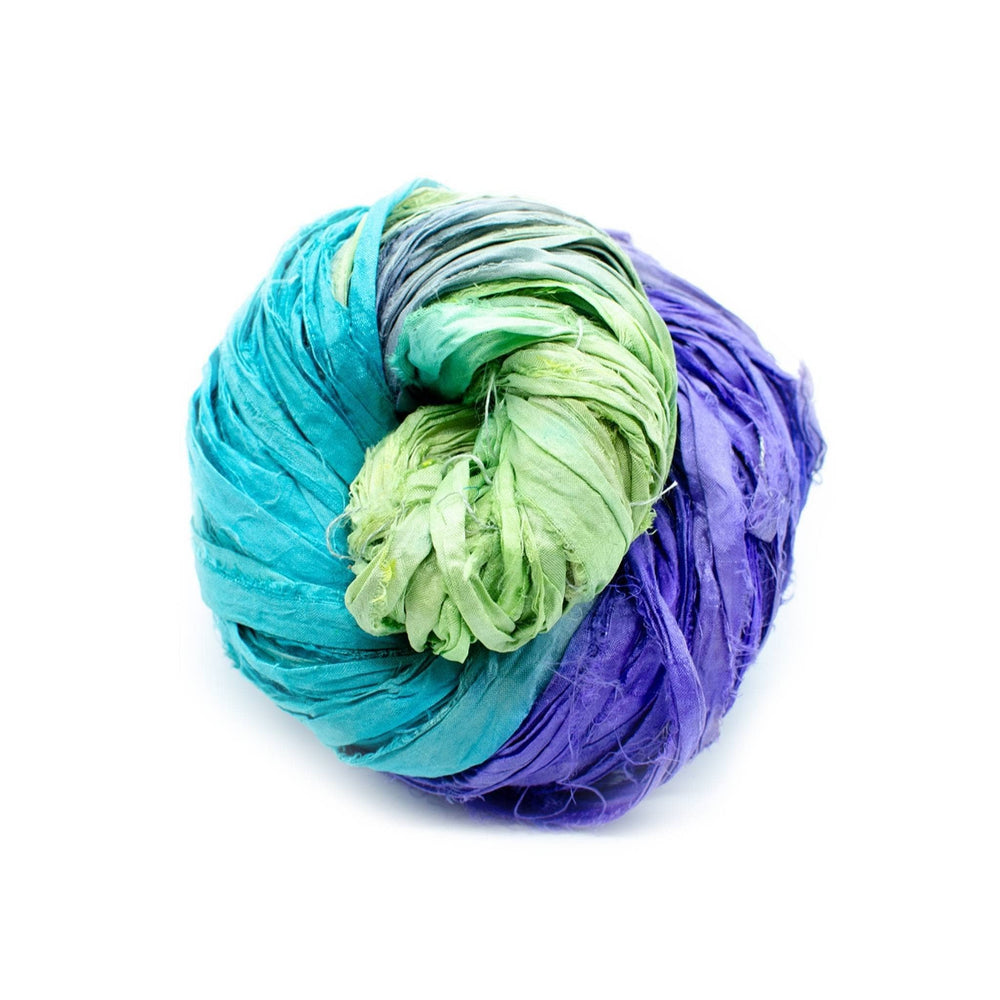
Slip stitch fabric is dense, so a lighter yarn keeps it soft. For cuffs and brims that will be worn against skin, a sport weight yarn with a little drape is a good match, and Darn Good Twist Sport Weight Silk Yarn, hand-dyed by artisans in India, has the smooth surface that makes the back loop easy to find.
If you'd like a new skein to practice on every month, Yarn of the Month sends three hand-dyed skeins with a knit and crochet pattern written for them, $29 a month plus shipping.
Slip Stitch Back Loop FAQ
Does slip stitch back loop crochet look like knitting?
Yes, more than most crochet stitches. The ridges mimic knit ribbing, and the fabric stretches the same way. It's the usual stand-in when a crochet pattern calls for ribbing.
Why is my slip stitch fabric so stiff?
Tension. Slip stitches have no height of their own, so a tight pull leaves no room for the fabric to move. Work looser or go up a hook size.
Is it beginner-friendly?
Yes. It's one motion repeated, with no yarn overs and a stitch count that never changes. The only skill is aiming for the back loop.