Rewards



Aran weight yarn is a medium-heavy yarn, a step thicker than worsted and a step thinner than bulky. In the Craft Yarn Council system it shares category 4 ("medium") with worsted, which is why the two get confused; in practice an aran yarn knits at a slightly larger gauge and makes a slightly heavier fabric. If a UK pattern calls for "aran" and you're in the US, worsted is close; if a pattern calls for worsted and you're holding aran, you'll want to swatch.
Here's where it sits, where the name comes from, and what to do with it.
Aran weight at a glance
| DK | Worsted | Aran | Bulky | |
|---|---|---|---|---|
| CYC category | 3 (light) | 4 (medium) | 4 (medium) | 5 (bulky) |
| Knit gauge (sts / 4 in) | 21-24 | 18-20 | 16-18 | 12-15 |
| Needle (US / mm) | 5-7 / 3.75-4.5 | 7-8 / 4.5-5 | 8-9 / 5-5.5 | 9-11 / 5.5-8 |
| Crochet hook | 7 to I-9 | I-9 | I-9 to K-10.5 | K-10.5 to M-13 |
| UK name | 8 ply | 10 ply | 10 ply / aran | 12 ply / chunky |
| Yards per 100 g (approx.) | 250-300 | 200-240 | 160-200 | 100-140 |
The yards-per-100-grams row is the quickest way to tell aran from worsted on a label: a 100-gram skein with 180 yards is aran; one with 220 is worsted. The full yarn weight chart covers the other categories.
Aran vs. worsted: does it matter?
For a scarf, a blanket or a hat, not much. Use the needle size that gives you a fabric you like and knit on. For a fitted garment, yes: the 10 percent difference in gauge adds up across a sweater. A pattern written for aran at 17 stitches per 4 inches, knit in worsted at 19, comes out about 10 percent smaller. Either swatch and adjust your needle size, or pick the pattern size that matches your actual gauge.
Worsted is the default in North American patterns; aran is more common in British and Irish ones. Many yarns labeled "worsted" in the US are what a UK knitter would call aran, and the reverse. Trust the gauge on the label, not the name.
Where the name comes from
The Aran Islands sit off the west coast of Ireland, and the heavily cabled, cream-colored sweaters knit there from the early 1900s became famous enough that both the sweater style and the yarn weight took the name. The sweaters were knit in a thick, lightly spun wool with the lanolin left in, which shed rain and showed off the cables. That's still what aran yarn is best at: stitch definition in cables and texture, with enough weight to hold the shapes.
A small myth worth clearing up: the story that each family had its own cable pattern so drowned fishermen could be identified is a 20th-century invention. The patterns were about texture and warmth, and about selling sweaters.
What to make with aran weight yarn
- Cabled sweaters and cardigans. The weight it was made for. Cables pop; the fabric is warm without being stiff.
- Hats, mittens and cowls. Faster than worsted, warmer, still fine enough for texture. A hat takes about 120 yards.
- Throws and blankets. Aran in a basketweave or seed stitch makes a dense, heavy throw. Count on 1,800 to 2,400 yards for a 50 x 60.
- Bags and baskets in crochet. Aran in single crochet holds its shape well, especially in cotton or silk.
- Textured scarves. Rib, seed stitch and cables all show better in aran than in worsted.
Aran is less suited to lace (too heavy to drape) and to very small projects (too thick for fine detail).
Substituting aran for other weights
- Aran for worsted: go down a needle size or accept a slightly larger, heavier piece. Buy about 10 percent more yardage than the pattern says.
- Aran for bulky: hold two strands of DK together, or go up two needle sizes and accept a looser fabric. Better to find a true bulky.
- Two strands of fingering or one DK plus one lace held together roughly equal an aran. Swatch; fiber changes everything.
Aran in silk and hand-dyed yarns
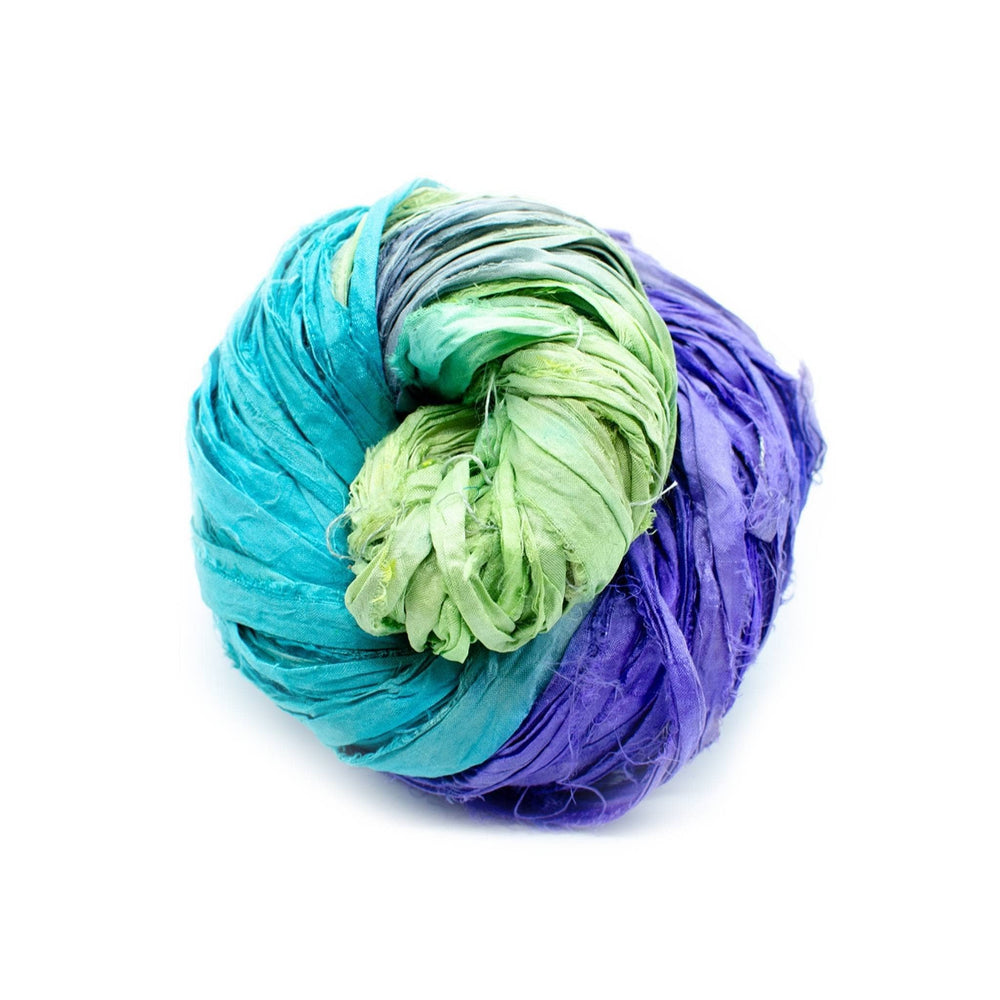
Hand-spun and recycled silk yarns are often aran-ish rather than precisely aran: thick-and-thin along the strand, averaging somewhere between worsted and bulky. Swatch over 6 inches instead of 4 and let the average set your gauge. In silk, aran weight makes a fabric with real heft and a sheen that wool doesn't have; it's beautiful in a simple cowl or a bag where the yarn does the work.
If you'd like to meet the weights by using them rather than reading about them, Yarn of the Month sends three hand-dyed skeins in rotating weights each month, with a pattern written for that yarn. $29 a month plus shipping.
Aran weight yarn FAQ
Is aran the same as worsted?
Close but not identical. Both are category 4 medium yarns; aran is the heavier end, knitting at about 16 to 18 stitches per 4 inches versus 18 to 20 for worsted. They substitute for each other in accessories; swatch for garments.
What needle size for aran weight yarn?
US 8 to 9 (5 to 5.5 mm) for knitting; I-9 to K-10.5 (5.5 to 6.5 mm) for crochet. Go up a size for drape, down for density.
Is aran weight yarn the same as 10 ply?
In UK and Australian terms, yes: aran is usually sold as 10 ply, though some sources call worsted 10 ply too. The gauge on the label is the reliable guide.