Rewards



If you can knit a scarf, you can knit a blanket. It's the same rectangle, wider. What changes is the planning: a blanket is a real amount of yarn and a real number of hours, and the few decisions you make before casting on decide whether it's a throw you use for twenty years or a very large swatch in a closet.
Here are those decisions, in order, plus a pattern.
Step 1: Choose a size
| Blanket | Size (inches) | Worsted yarn | Bulky yarn |
|---|---|---|---|
| Baby / stroller | 30 x 36 | 700-1,000 yds | 450-650 yds |
| Lapghan | 36 x 48 | 1,100-1,500 yds | 700-950 yds |
| Throw | 50 x 60 | 1,900-2,600 yds | 1,200-1,700 yds |
| Twin | 66 x 90 | 3,700-5,000 yds | 2,400-3,200 yds |
| Queen | 90 x 100 | 6,000-8,000 yds | 4,000-5,200 yds |
Make a throw first. It's big enough to be useful and small enough to finish in a season.
Step 2: Choose yarn and needles
Weight. Worsted is the classic choice: warm, quick enough, and stitch patterns show. Bulky knits twice as fast and makes a heavier blanket. Yarn weights explained if you're between them.
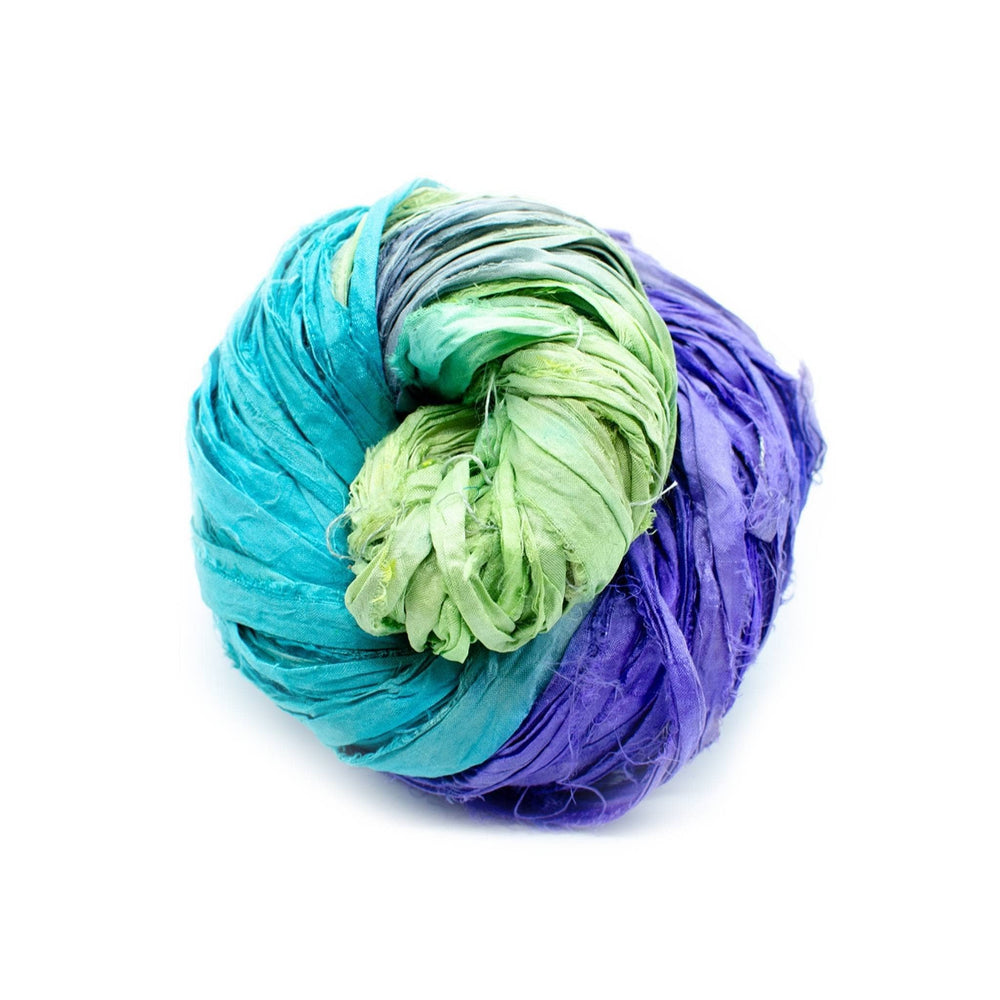
Fiber. Wool is warm and springy. Cotton and silk are cooler and drape more; a silk throw is lighter than it looks and glows in lamplight. Acrylic is washable and cheap. Blends split the difference. For a blanket that gets used, washable matters more than it does for a scarf.
Dye lots. For a solid-color blanket, buy every skein from one dye lot, plus one spare. Hand-dyed and recycled yarns vary on purpose; use them in stripes or let the variation be the point.
Needles. A long circular needle (32 to 40 inches) even though you're knitting flat: it holds 150+ stitches and carries the weight in your lap instead of on your wrists. US 8 (5 mm) for worsted, US 11 (8 mm) for bulky. Go one size up from the label for a softer, drapier blanket.
Step 3: Pick a stitch that lies flat
Stockinette (knit one row, purl the next) curls at the edges, badly, and a stockinette blanket will roll into a tube. Use a stitch that doesn't:
- Garter stitch. Knit every row. Squishy, reversible, flat. The right first blanket, and faster than it sounds because there's nothing to think about.
- Seed stitch. Knit 1, purl 1 across; on the next row, purl the knits and knit the purls. Beautiful texture, flat, slower. Seed stitch patterns here.
- Basketweave. Blocks of knit 4, purl 4 that swap every few rows. Looks woven, lies flat, easy to memorize.
- Chunky rib. Knit 2, purl 2 in bulky yarn. Thick, stretchy, very fast.
- Stockinette with a garter border. If you want the smooth look, knit the first and last 6 stitches of every row and the first and last 8 rows in garter. The border stops the curl.
Step 4: Swatch and calculate
Knit a 6-inch square in your stitch, wash it, and count stitches across 4 inches. Divide your target width by 4, multiply by the count, and that's your cast-on. A 50-inch throw at 16 stitches per 4 inches is 200 stitches. Skipping this is how a throw becomes a bath mat.
A simple first blanket pattern
Yarn: about 2,200 yards of worsted. Needle: US 9 (5.5 mm) 40-inch circular. Gauge: 16 stitches per 4 inches in garter. Size: about 50 x 60 inches.
- Cast on 200 stitches with the long-tail cast-on. Leave a tail three times the width of the blanket; for 50 inches that's a lot of yarn, so measure it out before you start.
- Knit every row. That's the pattern.
- Change colors at the start of a row whenever you like, leaving 6-inch tails. Carry a color up the side if the stripes are narrow; cut it if they're wide.
- Count your stitches every 20 rows. Garter hides a dropped stitch until it's a ladder.
- Knit until the blanket is 60 inches, or until you have about 10 yards left for binding off.
- Bind off loosely (use a needle two sizes larger if your bind-off tends to be tight). A tight bind-off makes the top edge narrower than the bottom.
Step 5: Finish
Weave every tail in 3 inches in two directions. Wet the blanket, roll it in towels, and lay it flat to dry, squaring the corners as you go. Blocking a garter blanket evens the stitches more than you'd expect. For a crisp edge, add a border: pick up stitches along each side and knit 6 rows of garter, or crochet one round of single crochet around all four edges. Fringe is the alternative.
Keeping a big project alive
Blankets get abandoned at the 40 percent mark, when the novelty is gone and the end isn't visible. Three things help: keep the blanket next to the chair, not in a closet; set a tiny daily goal (two rows); and have something small on the side so you don't start a second big project. Yarn of the Month fills that role for a lot of members: three hand-dyed skeins a month with a small pattern written for them, $29 a month plus shipping, finished in a weekend between blanket rows.
Knitting a blanket: FAQ
How long does it take to knit a blanket?
A 50 x 60 throw in garter stitch with worsted yarn is roughly 40 to 60 hours. Bulky yarn on US 11 needles can halve that. Arm knitting a chunky throw takes an afternoon.
What is the easiest stitch to knit a blanket?
Garter stitch: knit every row. It lies flat, is reversible and needs no counting beyond the cast-on.
Can I knit a blanket on straight needles?
Only a small one; straight needles hold about 100 stitches of worsted. For anything wider, use a long circular needle and knit back and forth on it.