Rewards



Cotton is the crochet yarn you reach for when the thing you're making has a job: a washcloth that scrubs, a market bag that carries groceries, a summer top that doesn't itch, a baby blanket that goes through the wash twice a week. It's strong, it breathes, it takes a machine wash, and it shows stitch definition like nothing else.
It's also inelastic, heavy when wet and hard on tired hands, so it's not the yarn for everything. Here's when to use it, which kind, and how to work with it comfortably.
What cotton yarn is good for
- Anything that gets wet. Washcloths, dishcloths, scrubbies, spa cloths, bath mats. Cotton absorbs, acrylic doesn't. Our waffle washcloth pattern is the standard first cotton project.
- Bags and baskets. No stretch means a market bag doesn't sag to your knees and a basket stands up on its own.
- Summer garments. Tops, tanks, cardigans, beach cover-ups. Cool against the skin, no itch.
- Baby and kids' things. Machine washable, hypoallergenic, breathable. The default for baby blankets in warm climates.
- Amigurumi and home decor. Crisp stitch definition and a firm fabric: toys hold their shape, coasters lie flat, plant hangers don't stretch out.
- Anyone who can't wear wool. Along with silk, bamboo and linen, cotton is the vegan and allergy-safe choice.
What cotton yarn is bad at
Warmth. Cotton doesn't trap air the way wool does; a cotton winter hat is a cold hat. Elasticity. It doesn't bounce back, so ribbing doesn't grip and a fitted sweater grows with wear. Weight. A cotton blanket is heavy, and heavier wet. Your hands. Cotton has no give, so tight tension makes it hurt to work with for long stretches. The tips below fix most of that.
The kinds of cotton yarn
Mercerized cotton
Treated with a caustic soda bath that makes the fiber smoother, stronger and shinier, and makes dye bolder. Less absorbent, so not the best for dishcloths, but the choice for garments, bags, amigurumi and anything where you want crisp, glossy stitches. Often labeled "pearl cotton" or sold as crochet thread.
Unmercerized (matte) cotton
Soft, slightly fuzzy, very absorbent. The kitchen-cotton of dishcloths and towels. Dyes come out more muted. Softens with every wash.
Organic and naturally dyed cotton
Grown without synthetic pesticides and usually unmercerized; sometimes dyed with plants. Softer in the hand, gentler on sensitive skin, a little more expensive. Our chakra beaded cotton is a cotton with small beads spun in, for jewelry and accent pieces.
Cotton blends
Cotton with acrylic for lighter weight and a bit of stretch; cotton with bamboo or linen for drape and a cooler hand; cotton with silk for sheen. Blends solve cotton's weakness for garments. Our fiber guide compares them all.
Recycled and chainette cotton
Recycled cotton is spun from mill offcuts and old garments, often blended with a little polyester for strength; it's soft, muted and inexpensive. Chainette or tube cotton is a knitted tube of fine cotton, very light for its thickness, good for summer sweaters.
Weights and hook sizes
Cotton comes in every weight from thread to bulky. The most common is worsted "kitchen cotton" (category 4) on an H-8 or I-9 hook. For garments, DK or sport cotton on a G-6 to H-8 gives a lighter fabric. Because cotton has no stretch, go one hook size up from what you'd use in wool for anything you'll wear, and stay at the label size for bags and baskets where you want firmness. Yarn weights explained if the labels are new.
Working with cotton without sore hands
- Loosen your tension. Cotton won't forgive a death grip. Let the yarn run through your fingers rather than clamping it.
- Use an ergonomic hook. A soft grip matters more with cotton than any other fiber.
- Take breaks every 30 minutes. Stretch your fingers back. Cotton fatigue builds without you noticing and shows up the next morning.
- Pick taller stitches. Double crochet and half double are easier on the hands than row after row of single crochet; our crochet stitches guide has the options.
- Wind hanks into balls. Cotton tangles and catches on itself more than wool; a center-pull ball keeps it flowing.
Washing and care
Most cotton is machine washable, warm or cool, and can go in the dryer on low, though it will shrink a little the first time (5 to 10 percent) and then settle. Mercerized cotton shrinks less. Dishcloths can take hot water. Garments: wash cool, lay flat, and reshape, since wet cotton stretches under its own weight on a hanger. Colors can bleed on the first wash, so wash a new red dishcloth alone.
Cotton vs. the alternatives
Cotton vs. acrylic: cotton absorbs, breathes and holds shape; acrylic is lighter, cheaper, warmer and stretchier. Full comparison here. Cotton vs. silk: both plant-safe and cool; silk drapes and shines, cotton is crisper and cheaper. Cotton vs. linen: linen is stiffer at first and softer after washing, with better drape; cotton is softer from the start. Cotton vs. bamboo: bamboo is silkier and drapier, cotton sturdier.
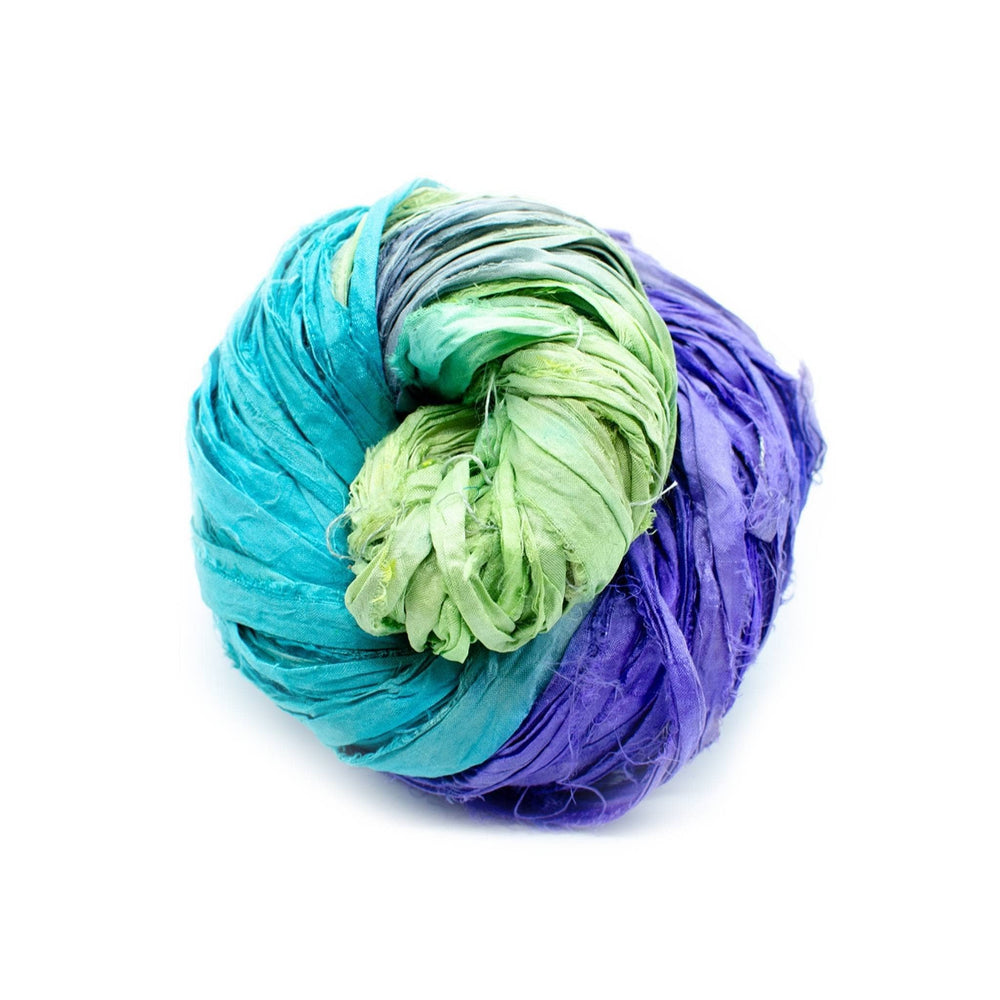
If you'd like to try several plant fibers without buying a shelf of them, Yarn of the Month sends three hand-dyed skeins a month with a crochet and knit pattern written for them, $29 plus shipping. Most months are recycled silk, which behaves a lot like a drapier cotton on the hook.
Cotton yarn for crochet FAQ
Is cotton yarn good for crochet?
Yes, for anything washable, absorbent or structured: dishcloths, bags, baskets, summer tops, baby items and amigurumi. It's a poor choice for warm winter wear or fitted, stretchy garments.
What size hook for cotton yarn?
H-8 (5 mm) or I-9 (5.5 mm) for worsted kitchen cotton; one size larger than the label for garments, label size or smaller for bags and baskets.
Does cotton yarn shrink?
A little, about 5 to 10 percent in the first warm wash and dry, then it stabilizes. Mercerized cotton shrinks less. Make dishcloths slightly oversized and wash garments cool.