Rewards



Seed stitch knitting gives you a flat, pebbled fabric with tiny bumps scattered evenly across the surface, like seeds. It lies flat, doesn't curl, and looks the same on both sides. For a stitch that only uses knit and purl, it does a lot.
It's a beginner stitch and a good second thing to learn after garter. The one rule that makes it work: on every row, knit the stitches that look like purl bumps and purl the stitches that look like knit Vs. You're always working the opposite of what you see.
That's the difference from rib. Rib stacks matching stitches into columns. Seed stitch offsets them so no column ever forms, and the fabric spreads out instead of pulling in.
Watch: Seed Stitch Video Tutorial
Watch how the second row starts with a purl rather than a knit, and how the yarn moves between the needle tips before every stitch.
What You Need
Yarn: medium (worsted) weight, as in the swatch. A smooth, light-colored yarn shows the bumps clearly so you can read which stitch comes next.
Needles: US 9 (5.5 mm), or the size that gives you the listed gauge.
Abbreviations (US terms): CO = cast on; K = knit; P = purl.
Stitch multiple: this version is worked over an even number of stitches (multiple of 2), using two rows. On an odd count you'd repeat a single K1, P1 row instead.
Seed Stitch Written Pattern
Size: 6"x6"
Gauge: Stockinette | 4" = 20 Stitches | 12 Rows
Yarn: Medium Weight Yarn
Knitting Needle Size: US 9 (or size to achieve gauge)
Stitches Worked Over an Even Number of Stitches
Abbreviations: CO - Cast On
Pattern:
CO 30 stitches.
Row 1: *Knit 1, Purl 1, repeat from *
Row 2: *Purl 1, Knit 1, repeat from *
Repeat Rows 1 and 2 until piece measures 6" from cast on edge.
Fasten off, weave in ends, & block to 6x6" square.
Step-by-Step: How the Stitch Works
- Cast on 30 stitches. An even count means Row 1 ends on a purl, and that's what sets up the offset on Row 2.
- Row 1: knit 1, purl 1 across. Move the yarn to the back before each knit and to the front before each purl, passing it between the needle tips.
- Turn the work. The last stitch you purled now faces you looking like a knit V. In rib you'd knit it. In seed stitch you purl it.
- Row 2: purl 1, knit 1 across. This puts a purl bump on top of every knit from the row before, and a knit on top of every purl. The bumps checkerboard instead of lining up.
- Keep alternating the two rows. After a few rows you'll stop counting and just work the opposite of what you see: knit into the bumps, purl into the Vs.
Tips and Common Mistakes
- Rib by accident. If columns start forming, you've knit the knits instead of purling them. Rip back to the last good row; the fix is just starting the row with the other stitch.
- Yarn between the needles, not over. Carrying the yarn over the top when you switch adds a yarn over and an extra stitch. Count stitches every few rows until the motion settles in.
- Any side can be the right side. Seed stitch is reversible. If a pattern cares, mark the right side with a removable stitch marker on the first row.
- It's slower and uses more yarn than stockinette. All that yarn movement takes time, and the texture uses more yarn per inch. Budget roughly a fifth more than a stockinette piece of the same size.
- Tension shows. Loose purls make the fabric look uneven. Keep your purl wraps snug and block the finished piece; it evens out a great deal.
What to Make With the Seed Stitch
Because it lies flat, seed stitch works anywhere you'd otherwise need a border. A scarf in bulky yarn needs no edging at all. A washcloth in worsted cotton is a one-evening project. Seed stitch borders on a stockinette blanket stop the edges rolling; see how to knit a blanket for sizing. For full projects, 5 of our favorite seed stitch patterns covers hats, cowls and more. Sport and DK weight silk makes a seed stitch cowl with real drape; worsted and bulky give it more structure.
Related Stitches
- Knit Moss Stitch — seed stitch's taller cousin, with each row worked twice before the offset
- Knit 1x1 Rib Stitch — the same K1, P1 with the stitches stacked instead of offset
- Knit Lace and Seed Stitch — seed stitch bands alternating with an easy lace panel, a good next step
- Knit Garter Stitch — the other flat, reversible beginner fabric
- Browse every knit stitch tutorial
Yarn for This Stitch
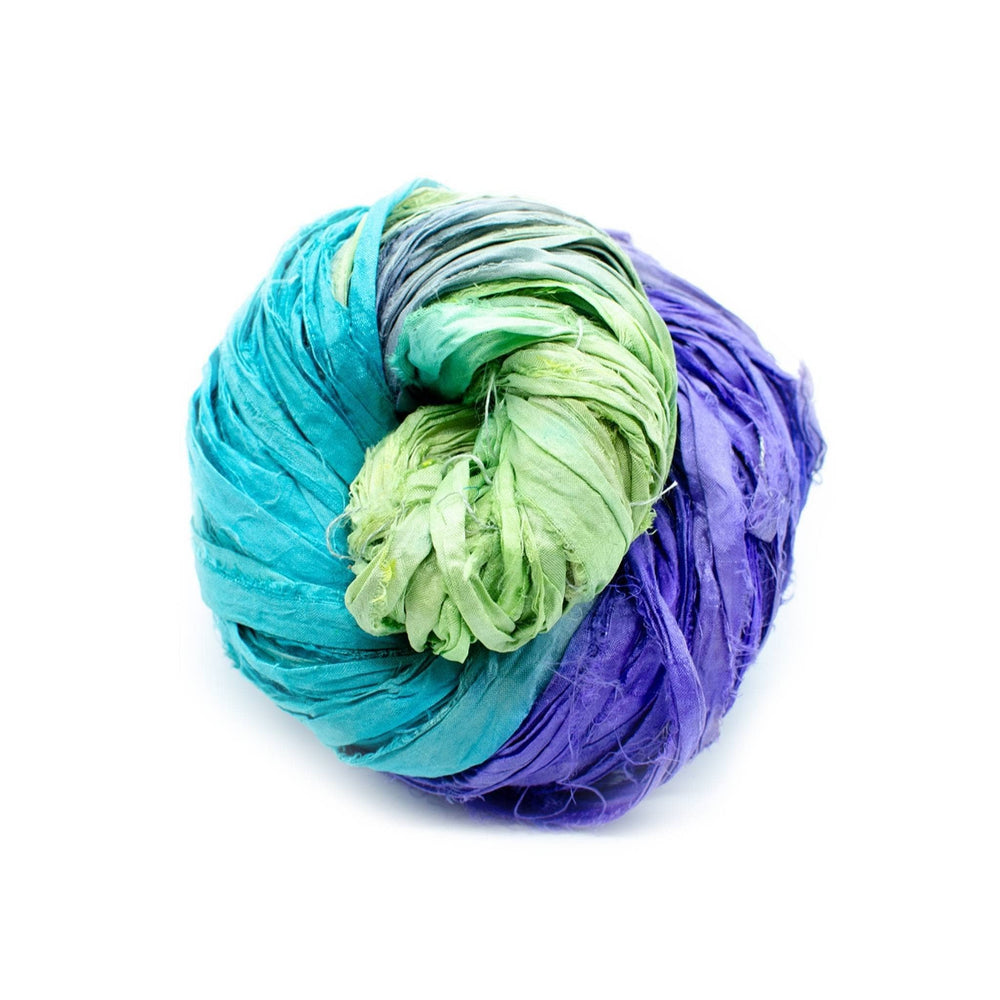
Seed stitch shows texture best in a smooth, solid-colored yarn. For a scarf or cowl, Darn Good Twist Sport Weight Silk Yarn, recycled silk hand-dyed by artisans in India, catches light on every bump; it lives in our sport weight yarn collection. For blankets and washcloths, start with worsted weight yarn.
If you'd like a new skein to practice on every month, Yarn of the Month sends three hand-dyed skeins with a knit and crochet pattern written for them, $29 a month plus shipping.
Seed Stitch FAQ
Is seed stitch reversible?
Yes. Both sides look identical, which is why it's a favorite for scarves, blanket borders and anything seen from the back.
Does seed stitch curl?
No. The even mix of knits and purls keeps it flat with no blocking tricks, so it's often used as an edging on stockinette.
What's the difference between seed stitch and moss stitch?
In US terms, seed stitch offsets the K1, P1 pattern every row. Moss stitch works each row twice before offsetting, so the bumps form short two-row dashes. In UK terms, "moss stitch" often means what Americans call seed stitch.