Rewards



Stockinette stitch is the smooth, V-shaped fabric most people picture when they think of knitting. One side shows neat columns of Vs; the other side shows rows of bumps, called reverse stockinette.
It's the fabric of store-bought sweaters, plain socks, and the body of most hats. It's thinner and drapier than garter stitch and shows off hand-dyed color well because there's no texture competing with it.
Stockinette is a beginner stitch once you know both the knit and purl stitch. The whole pattern is one rule: knit the right-side rows, purl the wrong-side rows. The one thing to know going in is that stockinette curls at the edges, and that's the fabric, not a mistake.
Watch: Stockinette Stitch Video Tutorial
Watch how the yarn moves to the front for the purl rows and to the back for the knit rows, and how the V side and the bumpy side take shape after a few repeats.
What You Need
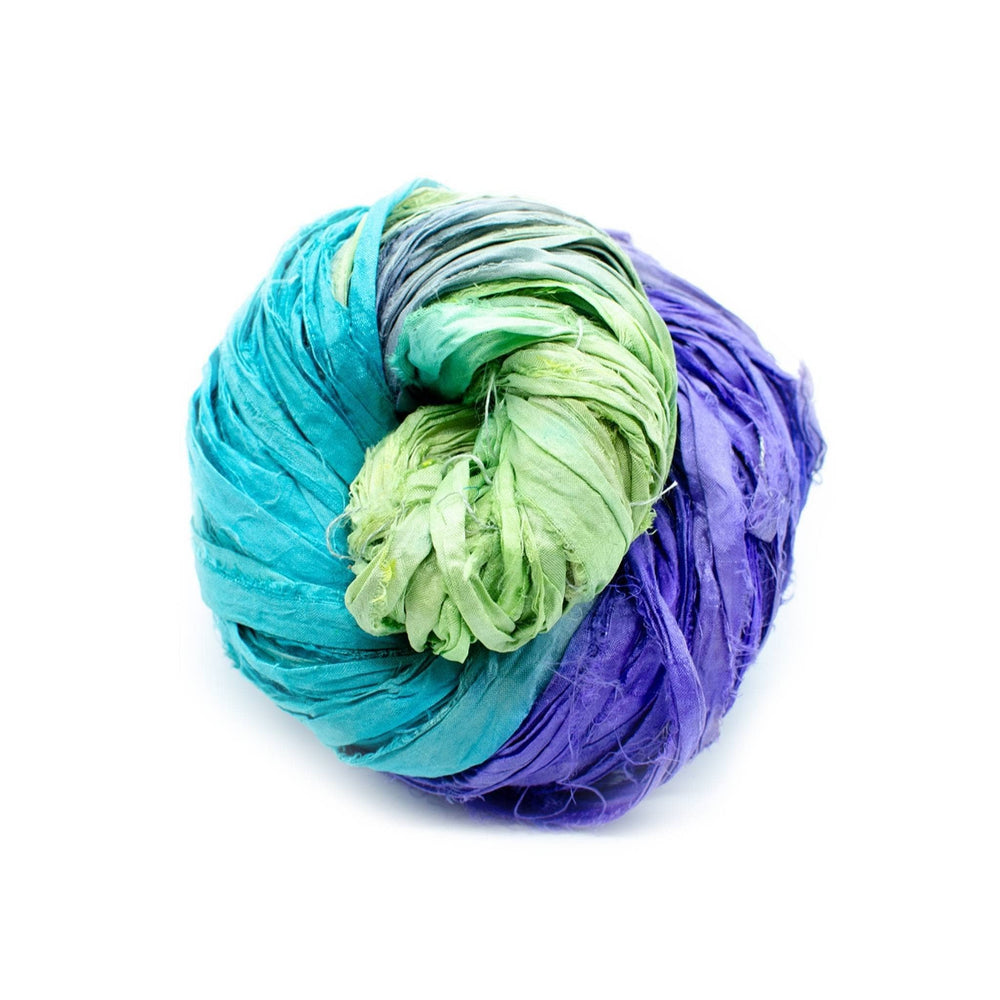
Yarn: worsted weight, as in the swatch; it's thick enough to see each V and bump. A smooth, light-colored yarn shows the stitch best while you learn.
Needles: US 9 (5.5mm). Straight or circular both work for a flat swatch.
Abbreviations: CO = cast on; K = knit; P = purl; st(s) = stitch(es); RS = right side; WS = wrong side.
Stitch multiple: any number of stitches. The swatch casts on 30.
Stockinette Stitch Written Pattern
Size: 6"x6"
Gauge: 5 st/in
Yarn: Worsted Weight Silk, approximately 16 yards
Needle Size: US 9
Abbreviations: None
Pattern:
Cast On 30 stitches
Row 1: Knit all stitches
Row 2: Purl all stitches
Repeat rows 1 and 2 until your piece measures 6" from the cast on edge.
Step-by-Step: How the Stitch Works
- Cast on 30. A long-tail cast-on gives a tidy edge.
- Row 1, knit every stitch. Yarn in back, needle into the front of the stitch from left to right, wrap, pull the new loop through, slide the old stitch off. Each knit stitch makes a V on the side facing you.
- Turn, Row 2, purl every stitch. Yarn in front, needle into the front of the stitch from right to left, wrap, pull through, slide off. On the side facing you this makes a bump; on the far side it makes another V.
- Repeat. Because you turn the work between rows, all the Vs stack on one side and all the bumps on the other. That's the whole trick: knit when the smooth side faces you, purl when the bumpy side does.
- Measure from the cast-on edge. Stop at 6 inches and bind off on a knit row. Expect the sides to curl until you block or border the piece.
Tips and Common Mistakes
- Look at the fabric, not the row count. If the side facing you is smooth, knit. If it's bumpy, purl. This saves you when you set the swatch down mid-row.
- Curling is normal. Stockinette rolls toward the knit side at the top and bottom and toward the purl side at the edges. A garter, rib, or seed-stitch border of a few stitches stops it; so does blocking, though blocking alone won't hold forever.
- Purl rows often come out looser. If the fabric shows alternating tight and loose rows, tug the yarn a little snugger on purl rows.
- Count your Vs. A dropped stitch runs down like a ladder. Thirty should stay thirty; catch a drop early with a crochet hook.
- Right side is the V side. Clip a stitch marker to it on row 1 so you never have to guess.
Stockinette vs. Garter Stitch
Garter stitch is knit on every row; stockinette alternates knit and purl rows. The result is two different fabrics. Garter lies flat, looks the same on both sides, and is thick and squishy. Stockinette is smoother and thinner, drapes more, has a right and wrong side, and curls at every edge. If you're making a scarf with no border, choose garter stitch. If you're making a sweater, a hat, or anything where you want the color to show, choose stockinette and plan for a border or ribbing.
What to Make With the Stockinette Stitch
- Hats: stockinette in the round in worsted weight, with a ribbed brim to stop the curl. See how to knit a hat.
- Sweaters: the standard body fabric, in DK or worsted.
- Scarves with a border: stockinette center with four or five stitches of garter or seed stitch on each edge, in sport or DK weight silk for drape.
Related Stitches
- Garter Stitch — knit every row; the flat, reversible alternative.
- Rib Stitch — knits and purls in columns; the usual border for stockinette.
- Seed Stitch — alternating knits and purls that lie flat and make a good edging.
- Browse every knit stitch tutorial
Yarn for This Stitch
Stockinette shows color more than any other stitch, so hand-dyed yarn looks its best here. For hats and sweaters, a worsted weight like the swatch. For a drapey scarf or shawl, a sport weight silk, hand-dyed by artisans in India, gives a lighter fabric with the same smooth face.
If you'd like a new skein to practice on every month, Yarn of the Month sends three hand-dyed skeins with a knit and crochet pattern written for them, $29 a month plus shipping.
Stockinette Stitch FAQ
Why does stockinette stitch curl?
Knit stitches are slightly wider than they are tall and purl stitches the reverse, so the two faces of the fabric pull unevenly. Borders in garter, rib, or seed stitch balance it. Blocking helps but doesn't fix it permanently.
Is stockinette stitch reversible?
No. The knit side shows Vs and the purl side shows bumps. Both are usable; a project worked with the bumpy side out is called reverse stockinette.
Does stockinette use less yarn than garter stitch?
Yes, for the same size piece. Stockinette is a thinner fabric with more rows per inch but less yarn per row. This 6-inch swatch used about 16 yards of worsted.