Rewards


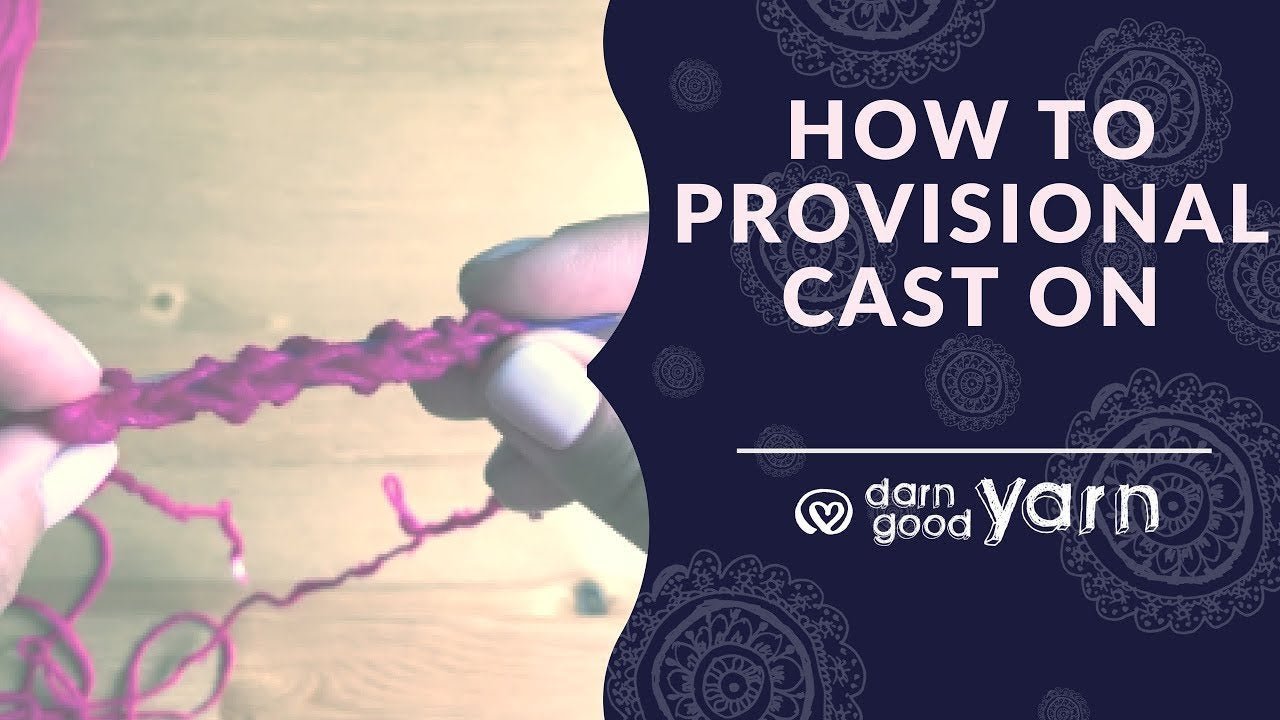
A provisional cast on is a temporary cast on. You start with a strand of waste yarn, work the project in your main yarn, and later pull the waste yarn out. What's left is a row of live stitches you can put back on a needle and knit in the other direction.
That's why it shows up in patterns for seamless scarves, folded hems, toe-up socks, and anything that gets grafted later. The hands-on part is easy once you understand that the waste yarn is only a placeholder. The one thing that makes it work: the waste yarn must be smooth, and you must pick up through the right side of the chain so it unzips.
Watch: Provisional Cast On Video Tutorial
Watch for the moment the waste yarn is removed at the end: the live stitches appear one at a time, ready for the needle.
What You Need
Your project yarn, plus a length of smooth waste yarn in a contrasting color. Cotton or a slick acrylic slides out without catching; fuzzy wool clings to your stitches. You'll also want a crochet hook close to your needle size, since the easiest version of this cast on is crocheted.
Abbreviations: CO = cast on, st(s) = stitch(es), K = knit, ch = chain (crochet). A smooth, light-colored main yarn makes the picked-up stitches easier to see when you come back to them.
Provisional Cast On Written Steps
Note from the original tutorial: A provisional cast on allows you to cast a temporary cast-on so you that can easily remove to show the live stitches. Check out this super easy tutorial!
Step 1: With waste yarn and a crochet hook, chain a few more stitches than your pattern needs to cast on. Cut the waste yarn and pull the end through the last chain. Tie a small knot in that end so you know which end to unzip from later.
Step 2: Turn the chain over. Each chain has a bump on the back. With your knitting needle and main yarn, pick up and knit one stitch into each bump until you have the number of stitches you need.
Step 3: Knit your project as the pattern directs. The waste-yarn chain stays at the bottom edge.
Step 4: When you're ready for the live stitches, undo the knot at the end of the chain and pull the waste yarn out. Slip each stitch onto a needle as it's released.
Step-by-Step: How the Technique Works
- Make the placeholder. The crochet chain is a row of loops connected to nothing else. The bumps on its back are temporary "stitches" to knit into.
- Knit into the bumps. Insert the needle into a bump, wrap the main yarn, and pull a loop through, like picking up stitches along an edge. Each bump gives you one stitch.
- Work the project. From here your knitting is normal. The waste chain hangs below the first row doing nothing.
- Unzip. Pulling the waste yarn from the knotted end undoes the chain one loop at a time, and each released loop drops a live stitch from your main yarn.
- Rescue the stitches. Put a needle through each live stitch as it appears, before you pull the next loop. You'll usually have one stitch fewer than you cast on; that's normal.
Tips and Common Mistakes
- Chain extra. Make the waste chain at least five chains longer than you need.
- Use the bumps, not the Vs. The smooth V side locks the stitches in; the bumps on the back release cleanly. If you picked up through the Vs, the chain won't unzip and you'll have to snip it out link by link.
- Mark the unzip end. A knot on the tail you finished with saves a lot of picking. Pull from that end only.
- Expect one fewer stitch. The first stitch's loop isn't fully formed when you unzip. Pick up the half-stitch at the edge, or increase one if the pattern needs the full count.
When You'll Use This
You'll reach for a provisional cast on when both ends of a piece need to match or join: a scarf worked from the middle out, a hat with a folded brim, a cowl grafted closed with Kitchener stitch, or a toe-up sock. It works in every yarn weight; in lace or fingering, use an even thinner waste yarn so it doesn't stretch the first row.
Related Stitches
- Long Tail Cast On — the everyday cast on for edges you'll keep
- Crochet Starting Chain — how to make the waste-yarn chain if crochet is new to you
- Knit Stockinette Stitch — the fabric most folded hems are worked in
- Browse every knit stitch tutorial
Yarn for This Stitch
For the project yarn, anything smooth is easiest to pick up again. DGY's recycled silk comes in lace through super bulky weights; the DK weight is a comfortable place to practice. Keep a scrap of smooth cotton for the waste yarn.
If you'd like a new skein to practice on every month, Yarn of the Month sends three hand-dyed skeins with a knit and crochet pattern written for them, $29 a month plus shipping.
Provisional Cast On FAQ
What is a provisional cast on used for?
Any time you need live stitches at the cast-on edge later: grafting two ends together, knitting a border in the other direction, or folding a hem and joining it to the inside.
Can I do a provisional cast on without a crochet hook?
Yes. Work a long tail cast on with the waste yarn as the "tail" strand and your main yarn as the working strand; the waste yarn unzips the same way. The crochet version is easier to remove.
Why do I have one fewer stitch after removing the waste yarn?
The first stitch you picked up has only half a loop at the edge. Pick up that edge loop to restore the count, or add one stitch on the next row.