Rewards



The reverse slipped plait cable looks like a braid, but there's no cable needle. One stitch at the edge of a five-stitch panel is slipped for two rows, dropped off the needle, then picked up and knit after the stitches it crosses. The strand lies over the panel like a strap.
The crossing alternates, one strand from the right and then one from the left, every four rows. The swatch has two panels, each framed by two purl stitches, with garter edges. It's intermediate mostly because dropping a stitch on purpose takes some nerve.
The one thing that makes it work: slipping the same stitch on two rows before you drop it. That gives the strand enough slack to reach across two stitches.
Watch: Reverse Slipped Plait Cable Video Tutorial
Watch Rows 4 and 8. On Row 4 the dropped stitch is picked up after knitting two; on Row 8 two stitches go back to the left needle first.
What You Need
The swatch uses worsted (medium) weight yarn on 5.0mm (US 8) needles; a medium weight gives the crossing strand enough body to show. A smooth, light-colored yarn shows the braid best while you're learning.
Abbreviations used: CO (cast on), K (knit), P (purl), Sl wyib (slip one purlwise with yarn in back), Sl wyif (slip one purlwise with yarn in front), PU (pick up). Each panel is 9 stitches; the swatch casts on 24 for two panels plus 3 garter stitches each side.
Reverse Slipped Plait Cable Written Pattern
Size: 6"x6"
Gauge: 4x4 = 16sts by 20 rows in stockinette
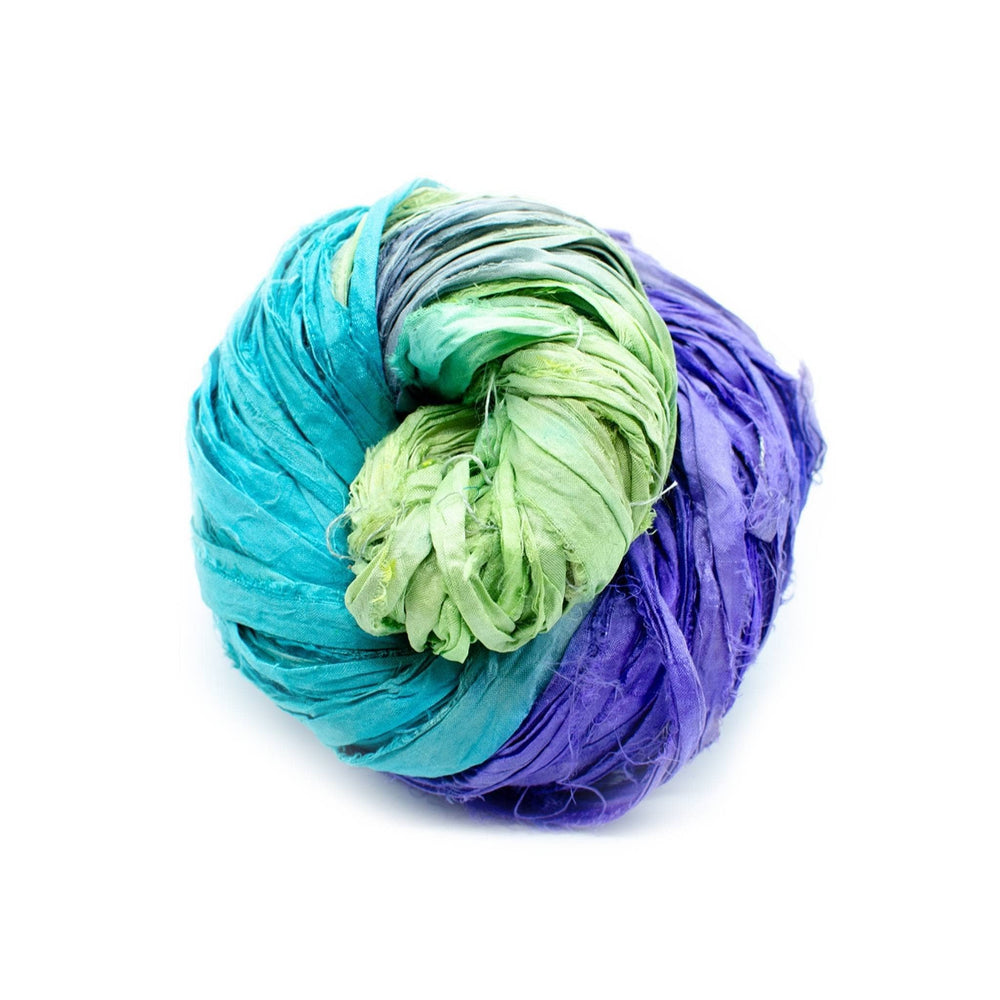
Yarn: 26g of DGY worsted weight recycled silk
Knitting Needle Size: 5.0mm
Abbreviations: K: Knit; P: Purl; Sl wyib: Slip one with yarn in back; Sl wyif: Slip one with yarn in front; PU: pick up
CO 24
Row 1: K3, [K2, P5, K2] twice, K3
Row 2: K3, [P2, sl 1 wyib, K4, P2] twice, K3
Row 3: K3, [K2, P4, sl 1 wyif, K2] twice, K3
Row 4: K3,[P 2; drop slipped stitch to front of work, K2, PU dropped stitch and knit it; K2, P2], K3
Row 5: K3, [K2, P5, K2] twice, K3
Row 6: K3, [P2, K4, sl 1 wyib, P2] twice, K3
Row 7: K3, [K2, sl 1 wyif, P4, K2] twice, K3
Row 8: K3, [P2, K2; sl 2 wyib, drop slipped stitch to front of work, slip the same 2 stitches back to left-hand needle, PU dropped stitch and knit it; K2, P2] twice, K3
Rows 9-32: Repeat Rows 1-8.
Row 33: K3, [K2, P5, K2] twice, K3
Bind Off.
Step-by-Step: How the Stitch Works
- Row 1 is a wrong-side setup row. Row 2 is the right side: purl 2, slip the first panel stitch with yarn in back, knit 4, purl 2.
- Row 3, wrong side: knit 2, purl 4, slip that same stitch again with yarn in front, knit 2. It's now been slipped twice and has a long strand behind it.
- Row 4, right side: purl 2, drop the slipped stitch off the needle to the front, knit 2, then pick the dropped stitch up and knit it. Its strand now lies across the two stitches you just knit. Knit 2, purl 2.
- Row 5 is a plain wrong-side row. Rows 6 and 7 slip the stitch at the other edge of the panel.
- Row 8: purl 2, knit 2, slip two with yarn in back, drop the slipped stitch to the front, return the two stitches to the left needle, pick up the dropped stitch and knit it, then knit 2, purl 2. The two crossings together read as a plait.
Tips and Common Mistakes
- Drop the stitch only on Rows 4 and 8, after slipping it twice. A stitch slipped once leaves a strand too short to cross.
- Keep a finger on the dropped stitch and pinch it until it's back on the needle.
- Count the panel after every crossing row: still five stitches between the purl frames.
- The right side is the Row 2 side, where the strands cross on top. The wrong side shows purls and no strands.
What to Make With the Reverse Slipped Plait Cable
This is a panel stitch, so use it as a column. One panel down the center of a hat, framed by rib, is a good first project; our how to knit a hat guide shows how to fit a panel into the stitch count.
Several panels across a worsted or bulky weight scarf make a plaited scarf. One panel also dresses up a headband or a sweater front.
Related Stitches
- Knit Cable Stitch — the standard cable, worked with a cable needle
- Knit Chunky Braid Stitch — a full plait on a wider panel
- Knit Wrap Mock Cable Stitch — another cable look without a cable needle
- Browse every knit stitch tutorial
Yarn for This Stitch
A smooth worsted weight yarn with a firm twist shows the crossing strands and keeps the dropped stitch from running. For a finer panel on a sweater or headband, Darn Good Twist Sport Weight Silk Yarn gives the strands a soft sheen, and the recycled silk is hand-dyed by artisans in India.
If you'd like a new skein to practice on every month, Yarn of the Month sends three hand-dyed skeins with a knit and crochet pattern written for them, $29 a month plus shipping.
Reverse Slipped Plait Cable FAQ
Do I need a cable needle for the reverse slipped plait cable?
No. The crossing is made by slipping a stitch for two rows, dropping it, and picking it up after the stitches it crosses.
What does "reverse" mean in the name?
The crossing strand comes from a dropped slipped stitch picked up after the stitches it crosses, the reverse of moving stitches on a cable needle.
Is it beginner-friendly?
It's a step past basic knitting. The moves are knit, purl and slip, but you need to track an eight-row repeat and drop a stitch on purpose.