Rewards



The slip stitch honeycomb pattern is a garter stitch fabric with slipped stitches staggered across every other row. Each slipped stitch stretches up over the garter ridge next to it, and the offset placement makes a grid of small hexagon-shaped cells, like a honeycomb.
It's a cushioned, squishy fabric with no curl, and it's thicker than plain garter because of the slipped stitches. It works well for anything that needs to lie flat and feel warm.
This is a beginner pattern. Every row is knit; the only extra is slipping a stitch with the yarn held in back. The four-row repeat is easy to memorize because Rows 1 and 3 are plain knit rows.
Watch: Slip Stitch Honeycomb Video Tutorial
Watch how Row 4 starts with K2 instead of K1, which shifts the slipped stitches over by one and builds the honeycomb offset.
What You Need
Worsted weight yarn on 5.0mm (US 8) needles matches the swatch. A smooth, light-colored yarn shows the cells clearly; in a dark yarn the pattern reads as plain garter until you look closely.
Abbreviations: CO = cast on; K = knit; sl1 wyib = slip one stitch purlwise with the yarn held in back; rep = repeat.
Stitch multiple: multiple of 2 + 1. The swatch casts on 23. More terms are in 70 knitting abbreviations every knitter should know.
Slip Stitch Honeycomb Written Pattern
Size: 6"x6"
Gauge: 4x4 = 16sts by 20 rows in stockinette
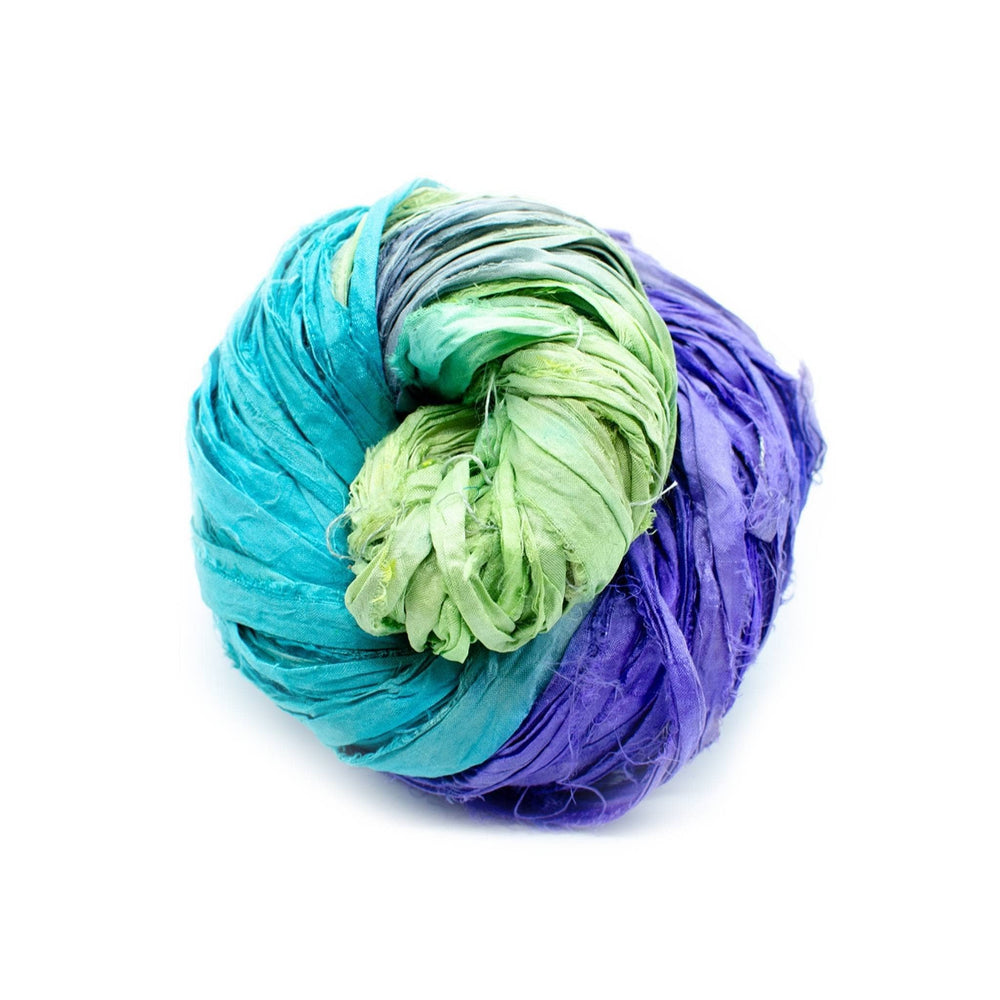
Yarn: 26g of DGY worsted weight recycled silk
Knitting Needle Size: 5.0mm
Abbreviations: K: Knit; P: Purl; Sl wyib: Slip with yarn held in back
CO 23
Row 1: K.
Row 2: K1. *Sl1 wyib. K1. Rep from *.
Row 3: K.
Row 4: K2. *Sl1 wyib. K1. Rep from * to last st. K1.
Rows 5-49: Repeat rows 1-4.
Row 50: K Across.
Bind off. Weave in ends
Step-by-Step: How the Stitch Works
- Cast on 23 and knit one plain row. This is Row 1, and it makes the first garter ridge.
- Row 2: knit 1, then slip the next stitch purlwise with the yarn at the back, knit 1, and repeat to the end. The yarn is already at the back because you're knitting, so there's no yarn movement; just slide the stitch over. Slipped stitches sit on the odd-numbered positions.
- Row 3: knit every stitch, including the ones you slipped. Working them now pulls each slipped stitch up over the ridge from Row 1.
- Row 4: knit 2 first, then slip 1, knit 1 to the last stitch, and knit it. Starting with K2 moves every slipped stitch one position over from Row 2. That offset is the honeycomb.
- Repeat Rows 1 through 4. The plain knit rows make the ridges; the alternating slip rows make the cells. Finish with a knit row and bind off.
Tips and Common Mistakes
- Always slip purlwise. Slipping knitwise twists the stitch and the cell walls look crooked.
- Keep the yarn relaxed behind the slipped stitch. If you pull it, the float shortens and the fabric puckers between cells.
- If the honeycomb doesn't appear, check Row 4. The K2 at the start is the whole trick; starting with K1 on both slip rows stacks the slipped stitches in straight columns instead of staggering them.
- Both sides look similar because the base is garter. The side where the slipped stitches stand up most is usually used as the right side.
- Slipped stitches use less yarn than knit stitches, so this fabric is a little lighter per row than plain garter at the same width.
What to Make With the Slip Stitch Honeycomb Pattern
It lies flat and feels thick, which makes it a good dishcloth stitch in cotton, a scarf stitch in worsted weight, and a blanket stitch in bulky weight where the cells show large. Because it doesn't curl, a scarf needs no border. For a bigger piece, the sizing guidance in how to knit a blanket applies here; just keep the stitch count odd.
Related Stitches
- Knit Garter Stitch — the base fabric this pattern builds on.
- Knit Honeycomb Stitch — the cabled honeycomb, a step up in difficulty.
- Slip Stitch Ribbing — another slip stitch texture, this time as a rib.
- Browse every knit stitch tutorial
Yarn for This Stitch
The swatch uses worsted weight recycled silk, and a worsted weight yarn gives cells that are easy to see. For a dense winter scarf, go up to bulky weight. For a lighter piece, Darn Good Twist Sport Weight Silk Yarn, hand-dyed by artisans in India, makes a fine honeycomb on smaller needles.
If you'd like a new skein to practice on every month, Yarn of the Month sends three hand-dyed skeins with a knit and crochet pattern written for them, $29 a month plus shipping.
Slip Stitch Honeycomb FAQ
Is slip stitch honeycomb reversible?
Nearly. The garter base looks the same on both sides, and the slipped stitches show on both, slightly more on one. Scarves work fine without a designated right side.
Does it curl?
No. Every row is knit, so it behaves like garter stitch and lies flat off the needles.
What's the difference between this and the cabled honeycomb stitch?
The cabled honeycomb uses cable crosses on a stockinette base and needs a cable needle. This version uses slipped stitches on garter, so it's faster, flatter, and beginner-level.